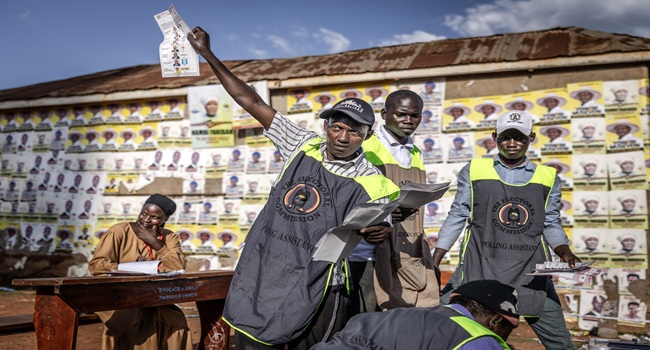
Polls closed in Uganda on Thursday, January 15, 2026, following a turbulent day of voting marked by an internet blackout, widespread technical glitches, and significant delays, as 81-year-old President Yoweri Museveni seeks to secure a seventh term and extend his nearly 40-year rule.
Museveni, who first came to power in 1986 after leading a rebel army to victory, maintains firm control over the state’s institutions and security forces.
He is widely expected to win convincingly, with early provisional results from the Electoral Commission showing him leading substantially.
In opposition strongholds like parts of Kampala, crowds erupted in cheers as vote counting began, particularly when returning officers announced ballots favoring the main challenger, Bobi Wine (real name Robert Kyagulanyi).
The 43-year-old singer-turned-politician, known as the “ghetto president” from his roots in Kampala’s slums, has endured what human rights groups describe as brutal repression during his campaign.
Bobi Wine accused the government of massive ballot stuffing and the arrest of his party officials, actions allegedly enabled by the nationwide internet shutdown imposed earlier in the week.
Delays plagued many polling stations, with ballot boxes arriving late and biometric verification machines malfunctioning issues opposition figures linked directly to the communications blackout.
“We are holding elections in the dark,” Wine declared after voting. “This is done in order to facilitate the intended rigging of the regime.”
He urged Ugandans to resist peacefully.
Despite the tensions, voting proceeded largely without major violence. The Ugandan Red Cross, which deployed teams nationwide, reported no significant incidents of unrest.
A heavy deployment of police and military personnel throughout the day helped maintain order and deter potential anti-government protests similar to those in neighboring Kenya and Tanzania.
Museveni himself acknowledged problems with the voting technology, sharing that his own thumbprint scans failed on both hands before the machine finally accepted a facial scan.
He promised a full investigation.
The campaign echoed the contentious 2021 race, with hundreds of Wine’s supporters arrested beforehand.
Wine campaigned in a flak jacket, framing the contest as a “war” against what he called a military dictatorship.
Human Rights Watch criticized the recent suspension of 10 NGOs, including election observers, while the United Nations described the internet shutdown as “deeply worrying.” The government defended the measure as necessary to curb misinformation and incitement to violence.
Other opposition figures, such as veteran challenger Kizza Besigye (who faced Museveni four times previously), remain sidelined, with Besigye having been abducted in Kenya in 2024 and now facing an ongoing treason trial in Uganda.
Many Ugandans continue to credit Museveni with restoring stability after post-independence turmoil and driving economic growth, despite persistent corruption scandals.
Supporters like 42-year-old Angee Abraham Lincoln in Kampala praised the country’s “peace and security” and the ruling party’s organization.
Museveni, after finally casting his vote, said it was for anyone “who believes in Uganda… who believes in Africa.”
Official results are expected within 48 hours, though early tallies already show Museveni with a commanding lead.
Source : myxyzonline/Africanews