
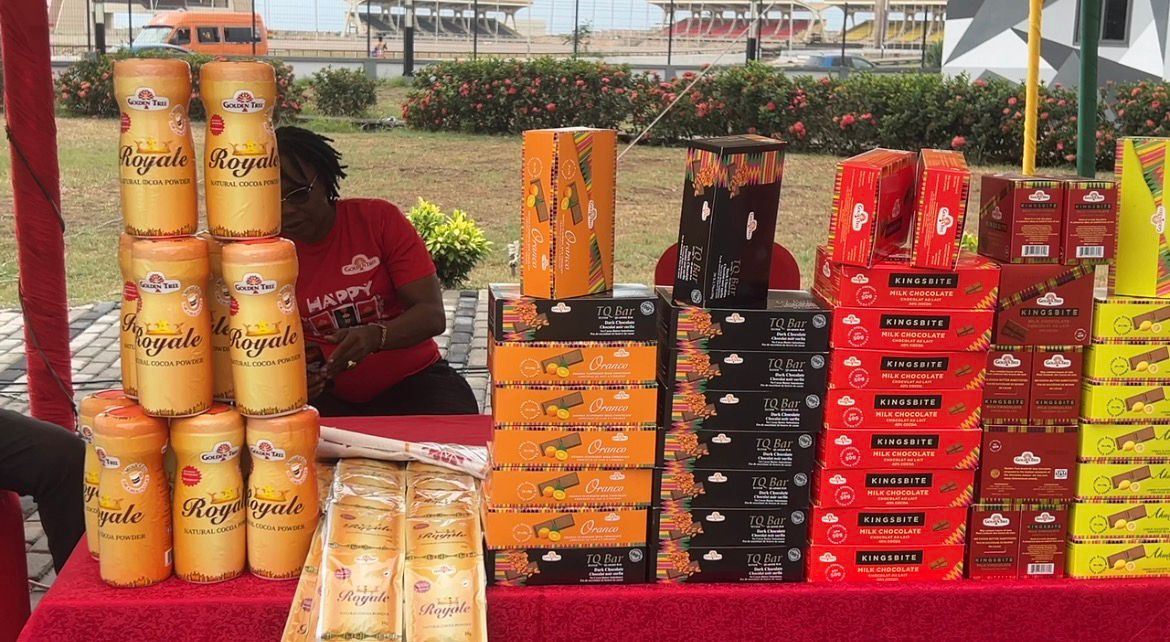
Ghana has launched the 2026 National Chocolate Month with a renewed commitment to deepen local processing, expand domestic consumption, and reposition cocoa as a pillar of industrialization, tourism, and economic transformation.
The event, held at the Nationalism Park in Accra and organized by the Ghana Tourism Authority (GTA), brought together key stakeholders across the cocoa value chain, including the Ghana Cocoa Board (COCOBOD), Cocoa Processing Company (CPC), local chocolate manufacturers, and industry players.
This year’s celebration, under the theme “Eat Chocolate, Stay Healthy, Grow Ghana,” comes three days ahead of Valentine’s Day, strategically linking love, lifestyle, and local industry.

The Chief Executive Officer of the Ghana Tourism Authority, Maame Efua Houadjeto, described the celebration as more than a symbolic event.
Recounting a recent visit to the Fairafric Chocolate Factory in Amanase in the Eastern Region, where she observed schoolchildren learning how chocolate is made from bean to bar, she said the experience underscored the deeper purpose of the initiative.
“We are not just launching a Chocolate Month. We are launching a movement,” she said.
The GTA boss expressed concern that, although Ghana produces nearly 70 percent of the world’s cocoa used in premium chocolates, much of the value is captured abroad.
“The global chocolate industry is valued at over $160 billion. Ghana earned about $3.8 billion from cocoa last year, less than three percent of that value, despite being the world’s second-largest cocoa producer,” she noted.
She urged Ghanaians to choose locally made chocolate this Valentine’s season, stressing that domestic consumption supports jobs, farmers, and national pride.
“When we choose Ghanaian chocolate, we keep more value at home. Ghana does not just produce cocoa; Ghana produces joy, pride, and love,” she said.
Over the next three days, the Ghana Chocolate Fair will showcase local brands including Golden Tree, Fairafric, Mishkoko, Chocolate Republic, Ohima, Jolly’s, 57 Chocolate, Cocavilla, and others.

Delivering remarks on behalf of the COCOBOD Chief Executive, Director of Corporate Affairs Sam Jerome announced plans to retain between 40 and 50 percent of Ghana’s annual cocoa production to support domestic processing.
For years, Ghana’s cocoa financing model has relied heavily on forward sales of beans to generate revenue. However, this has sometimes limited the supply available for local processors.
“We are transitioning toward a more balanced model that will retain not less than 40 to 50 percent of annual production to support local value addition,” he said.
The move aligns with President John Dramani Mahama’s vision to reset Ghana’s cocoa economy through diversification, industrialization, and reduced vulnerability to external shocks.
Mr. Jerome emphasized that cocoa remains central to Ghana’s macroeconomic stability, contributing significantly to Gross Domestic Product and foreign exchange earnings.
“In an import-driven economy, foreign exchange from cocoa plays a crucial role in stabilizing the cedi and managing the cost of goods and services. Anything that affects cocoa has national consequences,” he stated.
He acknowledged that the industry faces production and industrial efficiency challenges but expressed confidence in the sector’s resilience.

Lastly, the Chief Executive Officer of the Cocoa Processing Company (CPC) reaffirmed the company’s commitment to strengthening Ghana’s footprint in the global chocolate market.
With over 60 years of operation, CPC continues to produce Golden Tree Chocolate and Peptin Cocoa Powder for domestic and international markets.
The CEO revealed that at a recent international exhibition in Saudi Arabia, Ghana’s cocoa products attracted significant attention, with visitors purchasing raw cocoa beans and cocoa powder that were originally intended for display.
“Many were surprised to learn that the cocoa originated from Ghana. Some assumed it came from Belgium,” the CEO noted, underscoring the need to strengthen Ghana’s branding in global markets.
The exhibition opened discussions on establishing a cocoa academy in Saudi Arabia, further highlighting growing international interest in Ghana’s cocoa expertise.
CPC also announced plans to host guided factory tours, chocolate tasting sessions, museum visits, and cocoa value education programs as part of the month-long celebration to promote cocoa tourism and deepen public appreciation of the value chain.
Stakeholders at the event agreed that National Chocolate Month must move beyond celebration to sustained action, deepening local processing, strengthening branding, and expanding domestic markets.
With over 800,000 cocoa farming families depending on the industry, speakers stressed that value addition is not merely an industrial goal but a social and economic imperative.
As Valentine’s Day approaches, organizers are urging Ghanaians to make a deliberate choice.
“Let love taste like Ghanaian chocolate,” the GTA CEO said.
National Chocolate Month is celebrated annually in February to promote chocolate consumption, encourage value addition, and integrate cocoa into Ghana’s tourism and lifestyle economy.
Source: myxyzonline.com