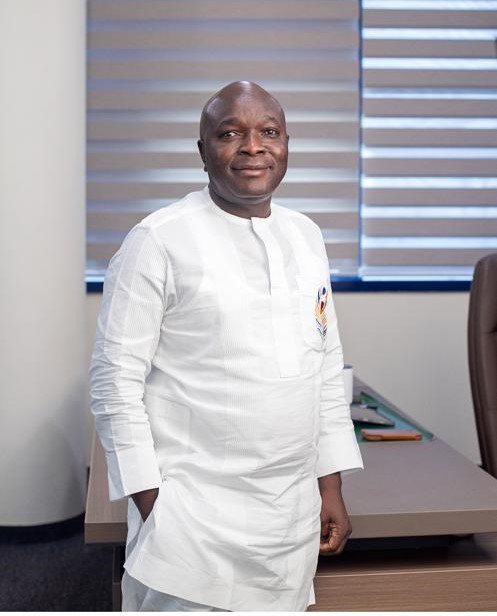
Renowned businessman and philanthropist Alhaji Seidu Agongo has warned that while Ghana’s macroeconomic indicators are showing a remarkable recovery, a “gathering global storm,” driven by a crash in cocoa prices and tensions in the Middle East, threatens to erode these fragile gains.
In an analytical piece reflecting on President John Dramani Mahama’s recent State of the Nation Address (SONA), Agongo applauded the government’s ability to steer the economy from a 54% inflation peak in 2022 to a remarkable 3.3% in February 2026.
However, he cautioned that external shocks are now testing the resilience of the so-called “Mahama recovery.”
Agongo noted that the cooling of inflation has moved beyond mere “economic jargon” to provide tangible relief for Ghanaian households.
“For many, the moderation of inflation. has translated into slower increases in food, transport, and utility costs,” Agongo stated. He credited a more stable Cedi and improved supply conditions for reducing the uncertainty that previously crippled business planning.
Despite domestic stability, two major international events are casting a shadow over Ghana’s economic outlook:
The Cocoa Price Collapse: After hitting a record $10,000 per ton in 2024, global cocoa prices have plummeted to approximately $3,026 per ton as of March 4, 2026. This forced Ghana to slash its producer price by 28.6%, severely impacting farmer incomes and state revenue.
Middle East Volatility: Recent Israel–United States strikes on Iran have triggered fears that crude oil prices could surge above $100 per barrel.
Agongo warned that for a “small, open economy” like Ghana, high oil prices could trigger a chain reaction: higher pump prices, increased transport fares, and renewed upward pressure on inflation.
Addressing the leadership required to navigate these crises, Agongo highlighted President Mahama’s extensive experience.
He recalled the President’s handling of the 2013–2016 capital flight and energy crisis, noting that his “tenacity” in fixing the power sector remains a foundation for today’s stability.
“While the world navigates the current stormy system, local policymakers will need to tap these experiences and deploy people-centered measures,” he wrote.
Agongo argued that the government cannot face these challenges alone. He outlined a multi-stakeholder strategy to protect Ghana’s gains:
For Government: Accelerate domestic food production and strengthen the “buffers” created by the Gold Board and fiscal reforms.
For SMEs: Adopt digital tools and renewable energy to remain competitive despite rising costs.
For Individuals: Practice deliberate financial planning and reduce unnecessary expenses.
“We must unite in our actions and words,” Agongo concluded. “We must pass whatever test these developments bring us, just as we triumphed over the bitter COVID-19 pandemic and debt restructuring.”
Source: myxyzonline.com