Vice President Prof. Jane Naana Opoku-Agyemang says the African diaspora remains critical to Ghana’s economic recovery, pursuit of historical justice, and long-term transformation agenda.
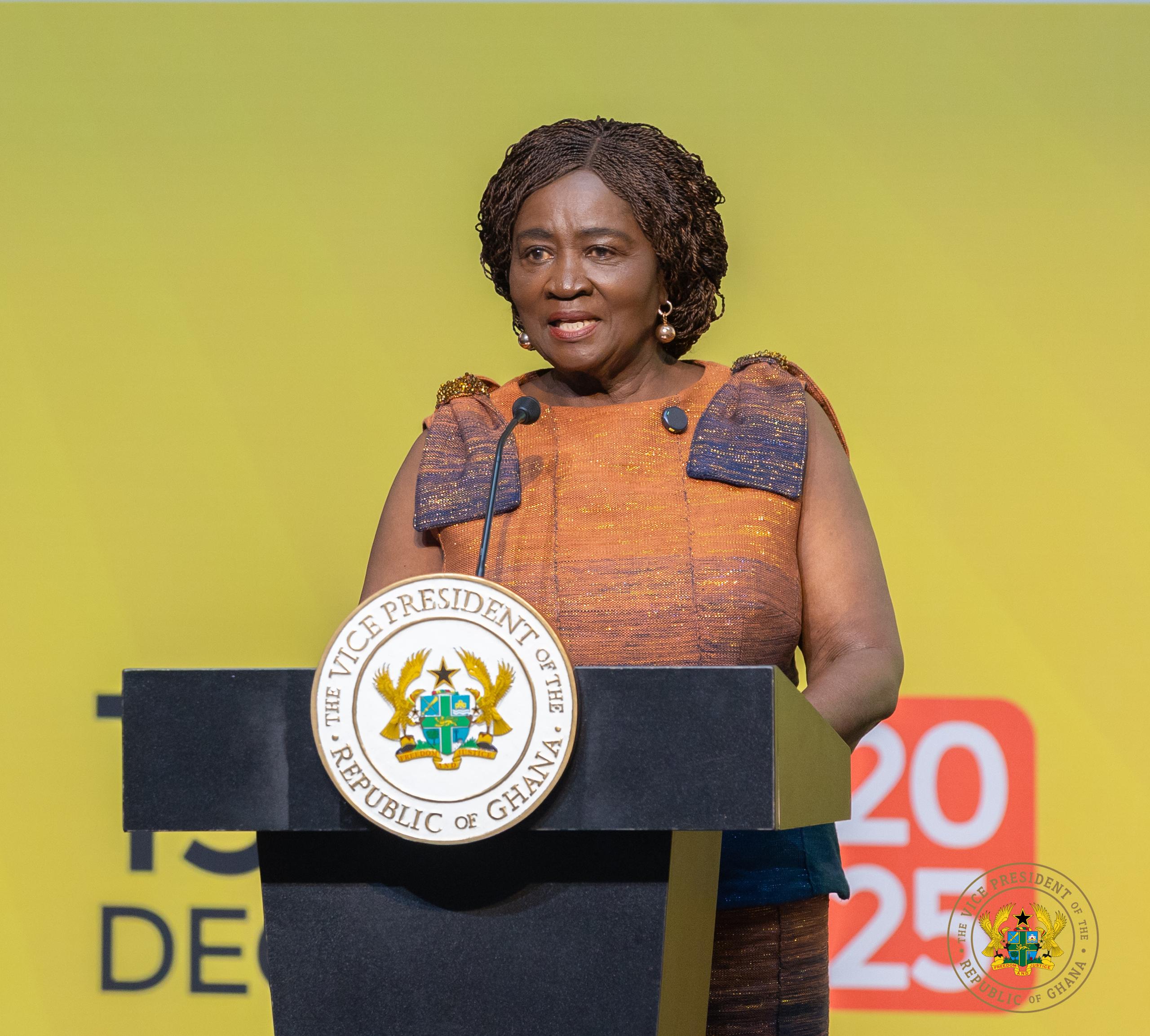
She made the remarks on Saturday, December 20, at the closing ceremony of the 2025 Diaspora Summit in Accra, where she represented President John Dramani Mahama.
The Vice President said the summit was convened at a defining moment in Ghana’s development journey, noting that the country had deliberately chosen to place history, justice, and responsibility at the centre of its national and continental engagements.
She said discussions over the two-day summit reaffirmed that reparations were not abstract moral demands, but complex political, economic, and historical issues that require structure, persistence, and credible leadership.
Prof. Opoku-Agyemang stressed that describing the diaspora as Ghana’s “17th region” reflected its enduring contribution to national development through remittances, investments, skills transfer, advocacy, and cultural preservation.

She said Ghana’s Reset Agenda would not be achievable without strong and purposeful partnerships, adding that the government was committed to strengthening diaspora-friendly policies and creating clear pathways for return, investment, and collaboration.
The Vice President cited ongoing economic reforms under the Reset Ghana agenda, noting that inflation was declining, foreign reserves were improving, and investor confidence was gradually returning.
These gains, she said, form the foundation for deeper engagement with the diaspora.
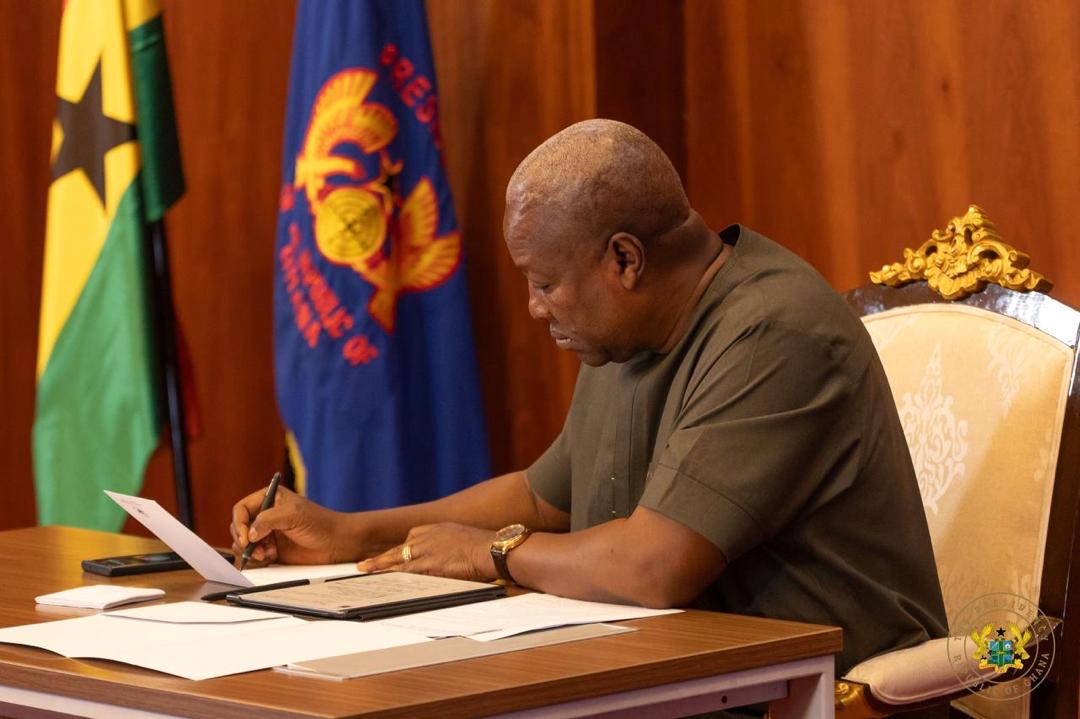
Reflecting on Ghana’s continental role, she said President Mahama’s mandate as the African Union Champion for Reparations signalled the country’s commitment to advancing the dignity and material claims of Africans and people of African descent worldwide.
Drawing on her academic work on the transatlantic slave trade, Prof. Opoku-Agyemang stressed that meaningful engagement with historical legacies requires more than remembrance, calling instead for honest, accountable, and sustained action.

She concluded that the Diaspora Summit 2025 did not only revisit the past, but also clarified the work that remains in deepening cooperation between Ghana and its global diaspora.
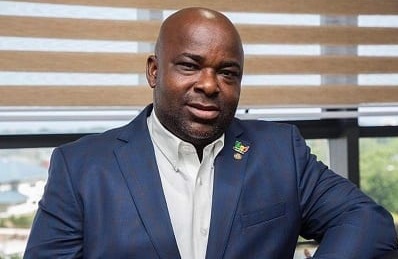
Meanwhile, Foreign Affairs Minister Samuel Okudzeto Ablakwa described the 2025 Diaspora Summit as a crunch moment in Ghana’s relationship with its global diaspora, saying it had laid the groundwork for a permanent framework to mainstream diaspora involvement in national development.
He said participants identified regulatory and legal barriers limiting diaspora investment and participation and called for reforms to unlock their full potential.
Mr. Ablakwa noted that reparatory justice was recognised not only as a moral and legal imperative, but also as a catalyst for global collaboration based on restitution and mutual respect.
Source: myxyzonline.com