Ghana has urged African nations to present a united front in negotiations over the continent’s critical mineral resources, insisting that Africa must secure fair economic returns and robust environmental safeguards from the global shift to clean energy.
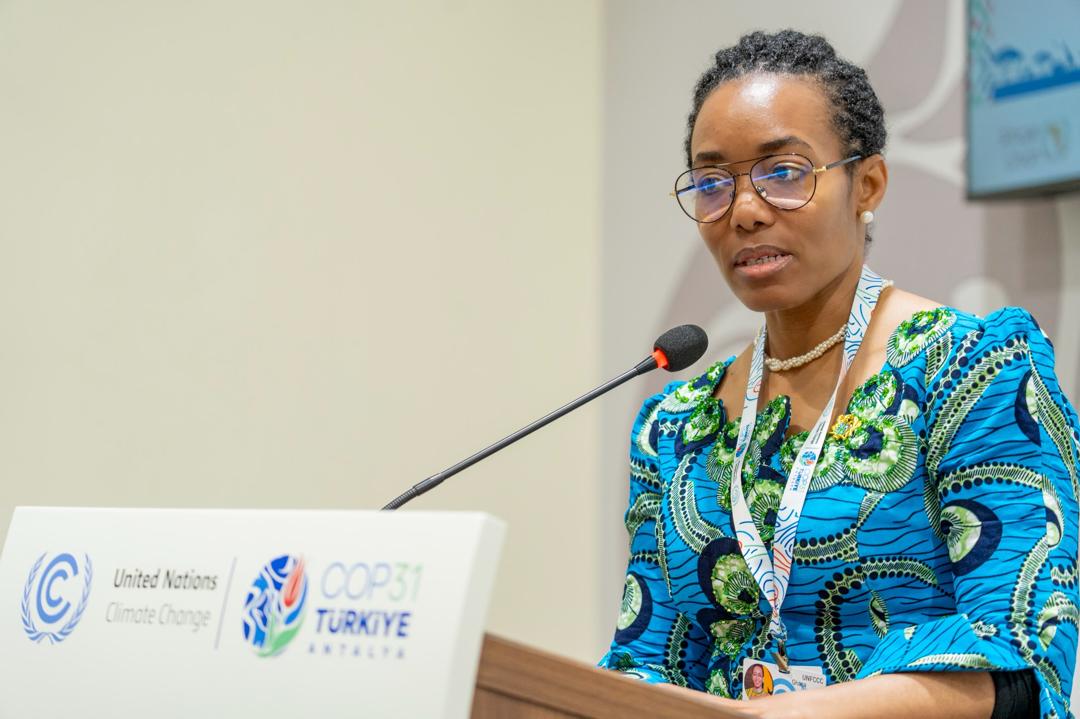
Delivering Ghana’s statement at the Africa Day Ministerial Segment of the 31st United Nations Climate Change Conference (COP31) in Antalya, Turkey, on 14 November 2026, Minister for Environment, Science and Technology Hon. Dr. Zanetor Agyeman-Rawlings called on African countries to speak with one voice on how the continent’s green minerals are traded and developed.
She stressed that Africa must move beyond exporting raw minerals and instead prioritise local value addition, regional industrialisation and the creation of integrated value chains to maximise the economic benefits of its natural resources.
Highlighting Ghana’s role as Chair of the African Group of Negotiators, Dr. Agyeman-Rawlings noted that the continent holds approximately 30 per cent of the world’s critical mineral reserves, including substantial deposits of cobalt and platinum-group metals.
These resources are essential for manufacturing batteries, wind turbines, electric vehicles and solar panels, making Africa indispensable to the global transition to net-zero emissions.
At the same time, she expressed deep concern that mineral extraction has frequently caused severe environmental damage, including deforestation, land degradation and the pollution of rivers and other water bodies.
Africa, she argued, continues to bear significant environmental costs from a climate crisis it did not cause, while the wealth generated from its resources is largely extracted and taken elsewhere.
“Africa is not here to beg. We are here to demand a moral obligation,” she declared.
The Minister urged African countries to harness the African Continental Free Trade Area (AfCFTA) and the African Green Minerals Strategy, adopted by African Heads of State, to strengthen their collective bargaining power.
Negotiating individually and competing to sell raw minerals at lower prices, she warned, would only weaken Africa’s position in the global market.
Dr. Agyeman-Rawlings also pressed for stronger international commitments on climate adaptation finance, calling on countries to deliver on the pledge to triple adaptation funding by 2035.
She insisted that grant-based finance must be channelled into water security, forest protection and the development of climate-resilient landscapes across the continent.
Among Ghana’s key demands was dedicated funding for the restoration of rivers, forests and lands degraded by mining, with environmental rehabilitation explicitly built into agreements governing the extraction of Africa’s minerals. She further advocated comprehensive multi-hazard early-warning coverage for every African, backed by adequate resources so communities can take preventive action before climate-related disasters strike.

Early-warning systems, she emphasised, must be paired with practical interventions and timely financial support to protect vulnerable communities from floods, droughts and other climate emergencies.
Water resources remain especially exposed, with many African communities already facing flooding, prolonged droughts, drying rivers and pollution.
Dr. Agyeman-Rawlings maintained that Africa’s standing in global climate negotiations will be strengthened only through unity, collective action and a firm commitment to safeguarding the continent’s economic and environmental interests.
The world depends heavily on Africa’s minerals to achieve its clean-energy ambitions and must therefore recognise its responsibility to support the continent’s development and environmental restoration.
“The world needs Africa’s minerals to secure its future. Africa needs the world to honour its obligations to ours,” she stated.
She expressed hope that COP31 in Antalya would mark a turning point in Africa’s climate diplomacy moving the continent beyond appeals for support toward actively shaping the terms of engagement in the global green transition.