
The National Disaster Management Organisation (NADMO) has extended its nationwide disaster volunteer reactivation exercise to the Upper East Region as part of efforts to strengthen community-based disaster preparedness and response.
The initiative forms part of a national tour aimed at reactivating Disaster Volunteer Groups (DVGs) in all districts, following several years of inactivity.
The exercise seeks to build a strong grassroots response system that empowers communities to take the lead in disaster prevention, preparedness, and emergency response.
The engagement will bring together regional and district directors of NADMO, disaster coordinators, security agencies, and other key stakeholders, with a focus on improving coordination and strengthening local resilience.
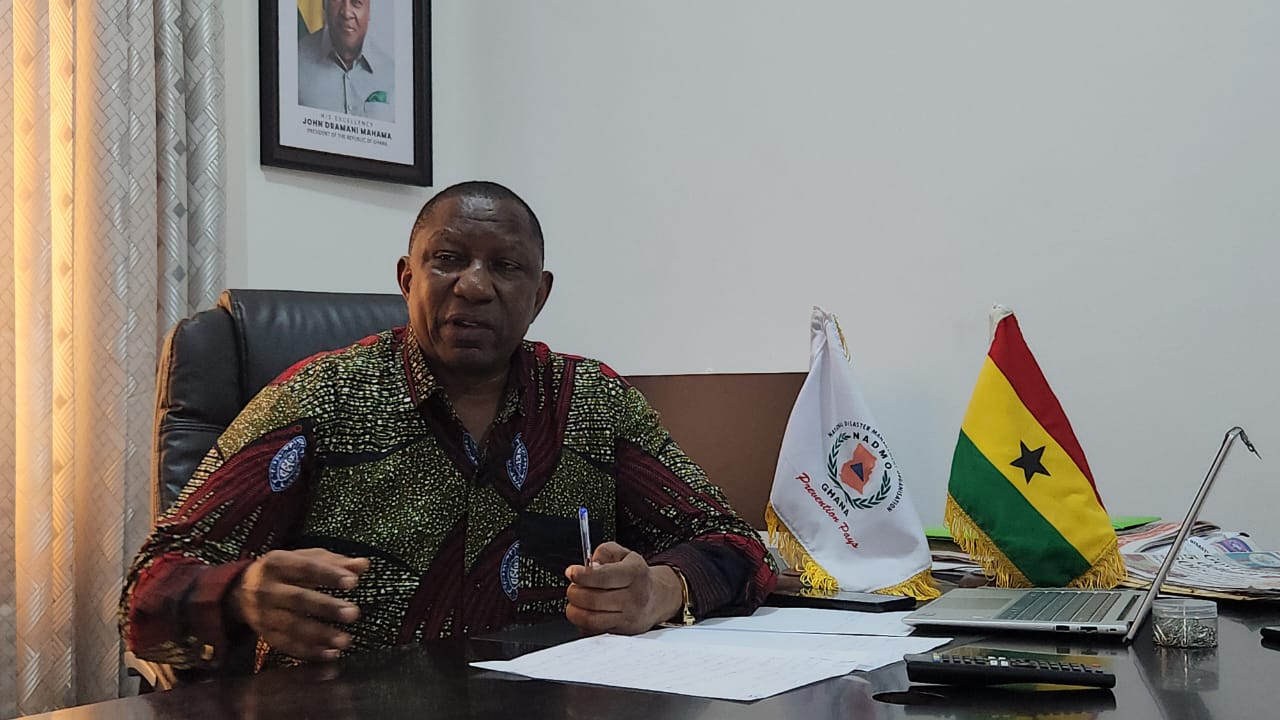
In an interview, the Deputy Director-General in charge of Livelihood Support and Community Empowerment, Albert Alalzuuga Akuka, described the reactivation as more than a programme, stressing that it is a national movement to rebuild local resilience and revive the culture of volunteerism.
“This movement places NADMO in every home, school, workplace, and community, empowering citizens to play an active role in disaster preparedness and response,” he said.
Mr. Akuka explained that the reactivation plan will operate through three key volunteer structures: community-based volunteer groups, institutional volunteer clubs in schools and religious institutions, and agency and civil society volunteers.
He noted that the Upper East Region remains vulnerable to recurring disasters, particularly bushfires and flooding, which in recent years have destroyed thousands of farmlands during the rainy season.
According to him, NADMO will intensify public education, especially among farmers, on sustainable farming practices, including appropriate planting periods and suitable crop selection, to reduce losses during floods.
As part of the initiative, NADMO plans to recruit about 40 volunteers per district and train selected youth, particularly those who can swim, to support rescue operations along riverbanks and other flood-prone areas.
At least two trained swimmers are expected to be equipped per district to assist in emergency response.
Mr. Akuka clarified that while volunteers will not receive direct monetary compensation, they will be supported through livelihood opportunities such as farming and other income-generating activities to enable them to sustain themselves while serving their communities.
He called on stakeholders and the general public to remain committed to the success of the reactivation exercise, emphasising that effective disaster management requires strong local leadership and community participation.
Source:myxyzonline.com