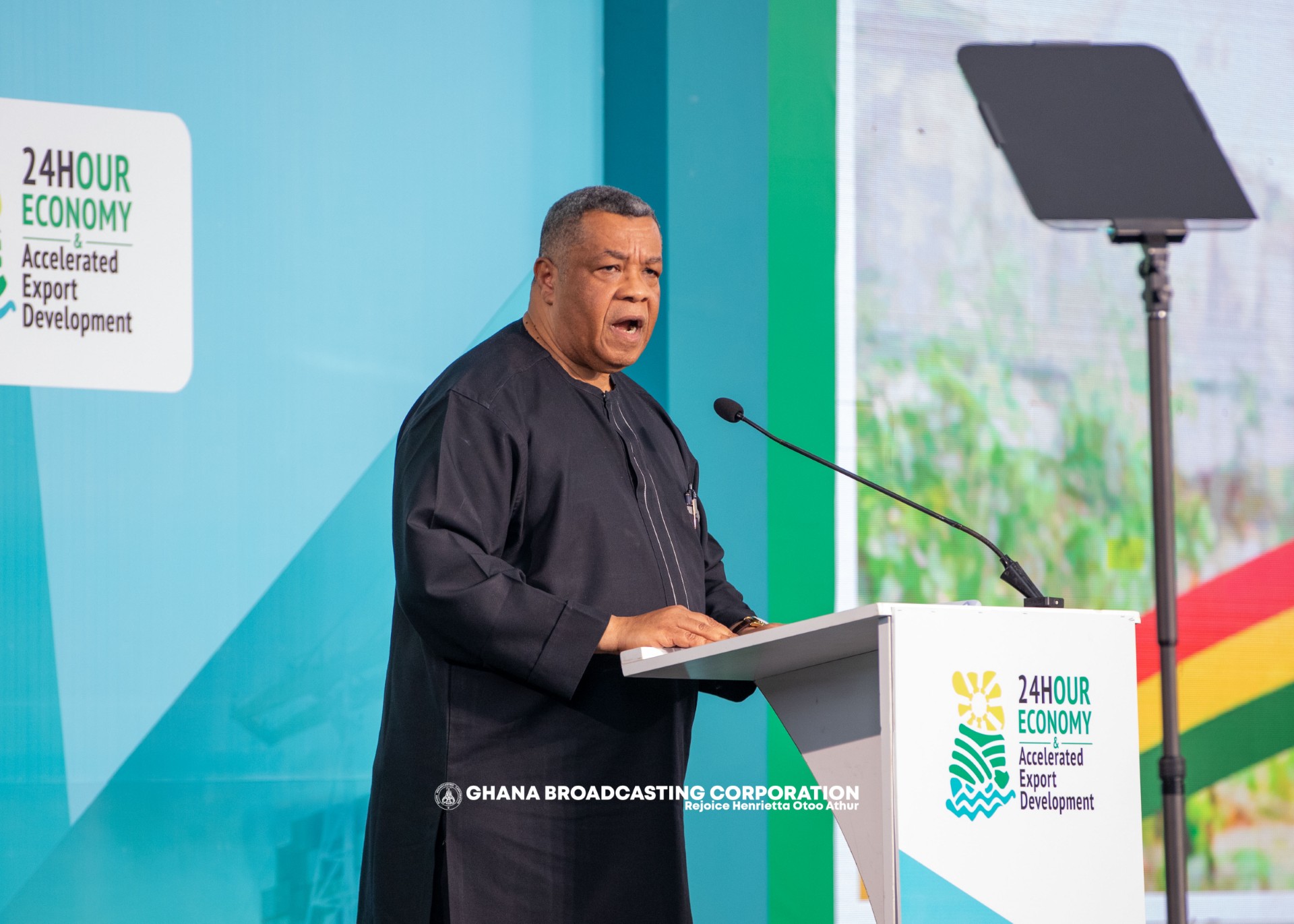
The 24-Hour Economy Secretariat will in November move a motion seeking to have it removed from lawsuits involving government’s proposed 24-hour markets, saying it has no jurisdiction or control over the projects.
Presidential Advisor on the 24-Hour Economy, Goosie Tanoh, said the Secretariat has been named in several legal cases concerning the markets despite having no responsibility for determining where they are located or how they are implemented.
“Our lawyer is moving a motion in November to get us to remove from the defendant’s list, because we have no jurisdiction, we have no status in the matter,” Mr Tanoh said.
He made the disclosure during an engagement with the media in Accra on Wednesday, August 19, 2026, as he clarified the distinction between the broader 24-hour economy programme and the proposed 24-hour markets.
According to Mr Tanoh, the use of the 24-hour branding on the markets has created the impression that the Secretariat is responsible for the projects.
“Although they use a 24-hour logo, we have no control over the markets,” he said.
“We are not allowed to decide where it goes, and so on and so forth.”
The proposed markets are expected to be established in 262 districts, with the Ministry of Local Government and district assemblies responsible for their implementation.
Funding is expected to come through the District Assemblies Common Fund.
Mr Tanoh said the Secretariat’s lack of involvement has not prevented it from being drawn into legal disputes over the projects.
“So if people sue 24-hour Economy Authority, we will be sued four or five times for something that we have no responsibility for,” he said.
He maintained that the Secretariat has no jurisdiction over the market programme and should therefore not be treated as a responsible institution in legal proceedings arising from the projects.
“For the moment, we have no responsibility whatsoever,” he said.
Mr Tanoh, however, acknowledged that the markets could support some of the objectives of the broader 24-hour economy programme if they are developed with the appropriate infrastructure.
He particularly highlighted the importance of cold-chain facilities and modern storage systems in improving efficiency across Ghana’s agricultural supply chain.
“If those markets are established and have the modern facilities that they will have, and of course, especially cold chain facilities and so on, it will contribute to the supply chain efficiency we want to achieve,” he said.
He said such facilities would provide farmers and traders with suitable places to preserve perishable goods, potentially reducing losses between production and consumption.
“If you have cold chain facilities, then your vegetables, your perishables and so on have somewhere to be stored,” Mr Tanoh said.
He said this could help address the estimated 30% to 40% post-harvest losses occurring within the supply chain.
“So that we don’t lose or add to the 30% to 40% post-harvest losses that we have within the supply chain,” he said.
Mr Tanoh’s comments draw a clear distinction between the proposed markets and the wider 24-hour economy initiative, which government has presented as a broader strategy for increasing production, improving productivity, expanding industrial activity and creating jobs.
Although the markets carry the 24-hour branding and could contribute to the programme’s supply-chain objectives, he stressed that their implementation remains outside the Secretariat’s mandate.
The Secretariat will therefore rely on the planned November motion to formally challenge its inclusion in the ongoing lawsuits.
The move, Mr Tanoh said, is necessary because the Secretariat should not be held legally responsible for decisions concerning projects over which it has no authority.
Story by : Akora Kofi Darko