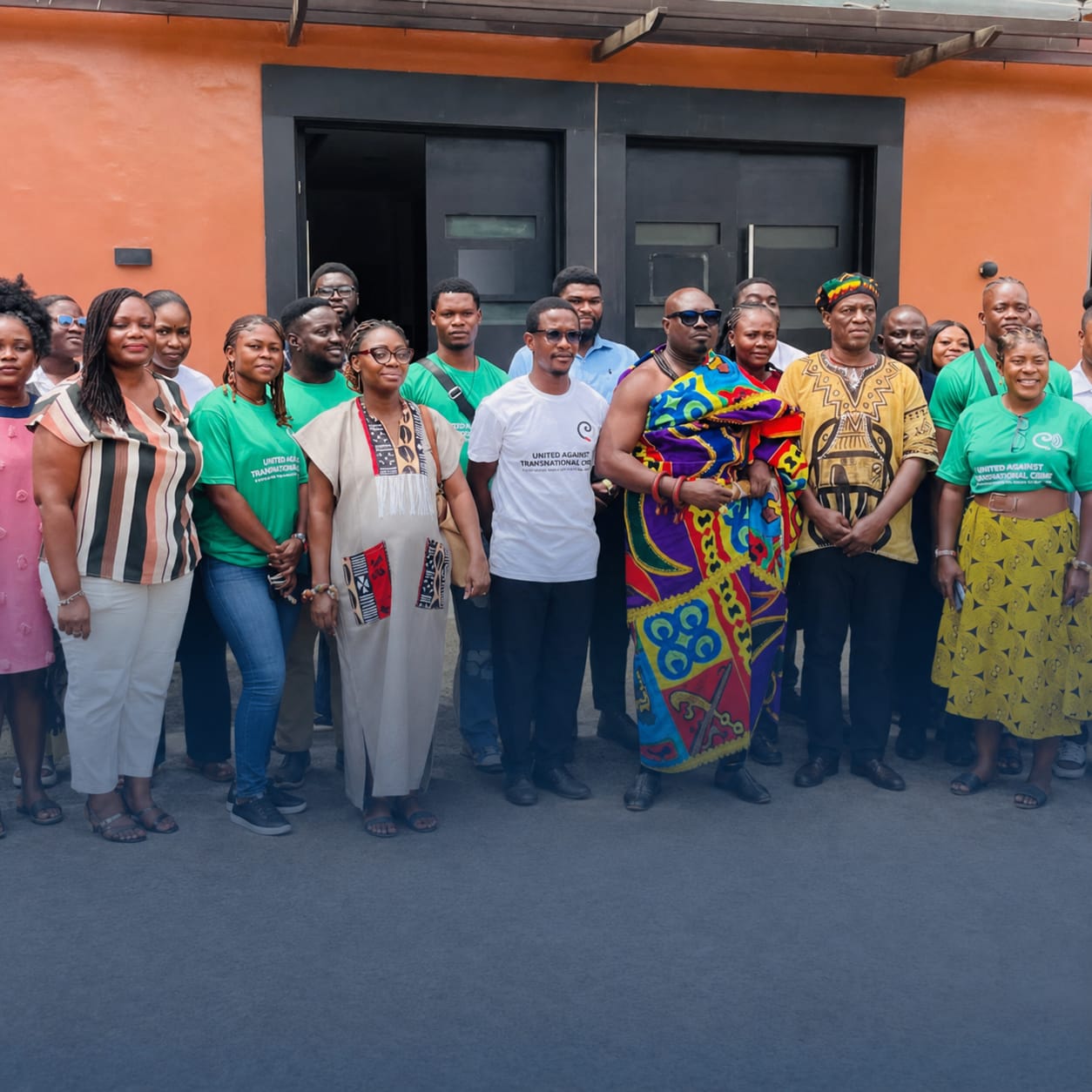
Accra, Ghana – A new Civil Society Coalition Against Transnational Crime was launched in Accra on Monday to strengthen collaboration between government, civil society organisations, traditional authorities, communities and the private sector in the fight against organised crime.
The coalition, unveiled to mark International Youth Day, will coordinate civil society efforts across nine key areas, including human trafficking, cybercrime, illicit finance, illegal mining, drug and weapons trafficking, maritime crime, extremism and corruption.
Convener of the coalition, Princess Yanney, said the initiative seeks to ensure that people rescued from trafficking situations are properly identified, protected and supported rather than treated as criminals.
She cited the recent rescue of nine people and the arrest of 10 suspects at Afienya, noting that the incident highlighted the urgent need for accurate victim identification and appropriate support systems.
“The coalition will establish nine working groups to engage relevant institutions on the various forms of organised crime,” Yanney said. She added that the group will operate under a charter focused on safeguarding, ethical conduct and conflict-of-interest standards.
Chairman of the occasion, Professor Caesar Apentiik, described organised crime as an entrenched and evolving threat that requires urgent collective action.
Citing the 2025 Global Organised Crime Index, he said Ghana recorded a criminality score of 5.77 out of 10, ranking 21st among 54 African countries and sixth among 16 West African countries.
Professor Apentiik stressed that civil society organisations have a crucial role to play because of their proximity to communities vulnerable to recruitment by criminal networks.
“The coalition is not intended to replace the state but to complement government efforts, provide community intelligence and promote accountability in the fight against transnational organised crime,” he said.
Story by : Edward Aryeh