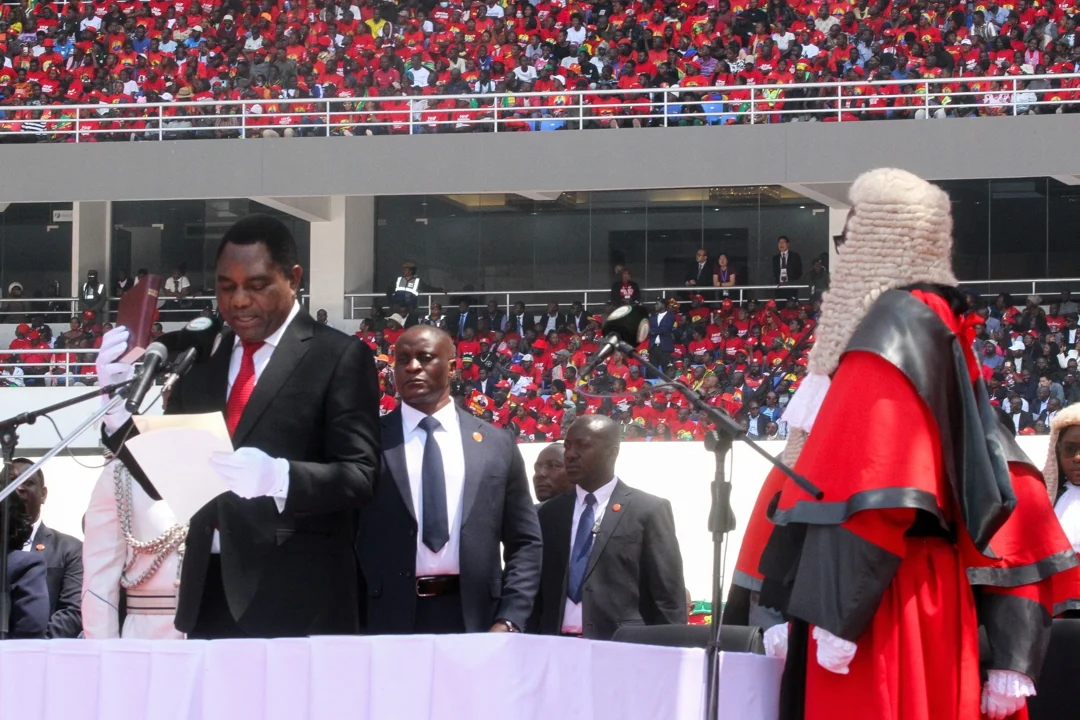
LUSAKA — Zambia’s President Hakainde Hichilema was sworn in for a second five-year term on Tuesday at a packed ceremony in Lusaka, even as his main election challenger remained in custody on treason charges that have deepened concerns over the country’s democratic process.
Thousands of supporters wearing the red colours of Hichilema’s United Party for National Development (UPND) filled National Heroes Stadium as the 64-year-old businessman and his running mate, Mutale Nalumango, took the oath of office. Several African leaders attended the inauguration.
Hichilema secured about 60 percent of the vote in the August 13 election, according to official results from the Electoral Commission of Zambia, while Brian Mundubile, a former provincial minister running under the NRPUP banner, received roughly 38 percent. The result gave Hichilema an outright victory without the need for a runoff.
The vote, however, was overshadowed by allegations of intimidation, restrictions on the opposition, and irregularities in the tallying process. International observers, including from the European Union, noted that while polling day itself was largely peaceful, late legal changes, unequal campaign conditions, and problems with result verification distorted the playing field.
Mundubile and his running mate, Makebi Zulu, went into hiding after a police raid on a property linked to them the day after the election. Authorities said they seized weapons and accused the opposition of plotting an armed insurrection claims the pair denied. They later surrendered or were detained and have been charged with treason, along with others. Their lawyers have said they reject the charges. Mundubile was reportedly transferred to Mukobeko Maximum Security Prison.
Opposition efforts to challenge the results in court were blocked when authorities sealed off the judiciary on the final day for filing petitions, citing security reasons a move criticised by rights groups as undermining due process.
In his inauguration address, Hichilema thanked Zambians for renewing his mandate and pledged to focus on economic growth so that citizens feel the benefits of the country’s recovery. He said he would remain “a servant president for all the people of Zambia” and stressed that the pursuit of political power must not come at the expense of peace and stability. He did not directly address the detention of his rival.
Hichilema first took office in 2021 after defeating then-President Edgar Lungu, inheriting a severe debt crisis, high inflation, and economic distress. During his first term he oversaw debt restructuring and macroeconomic stabilisation in the copper-rich nation, though many voters continued to feel pressure from the cost of living.
Copper remains central to Zambia’s economy, accounting for the bulk of export earnings, with China a major investor and creditor. The disputed election and subsequent arrests have raised questions about the trajectory of Zambia’s democracy under Hichilema’s continued leadership.
Source : Africanews