
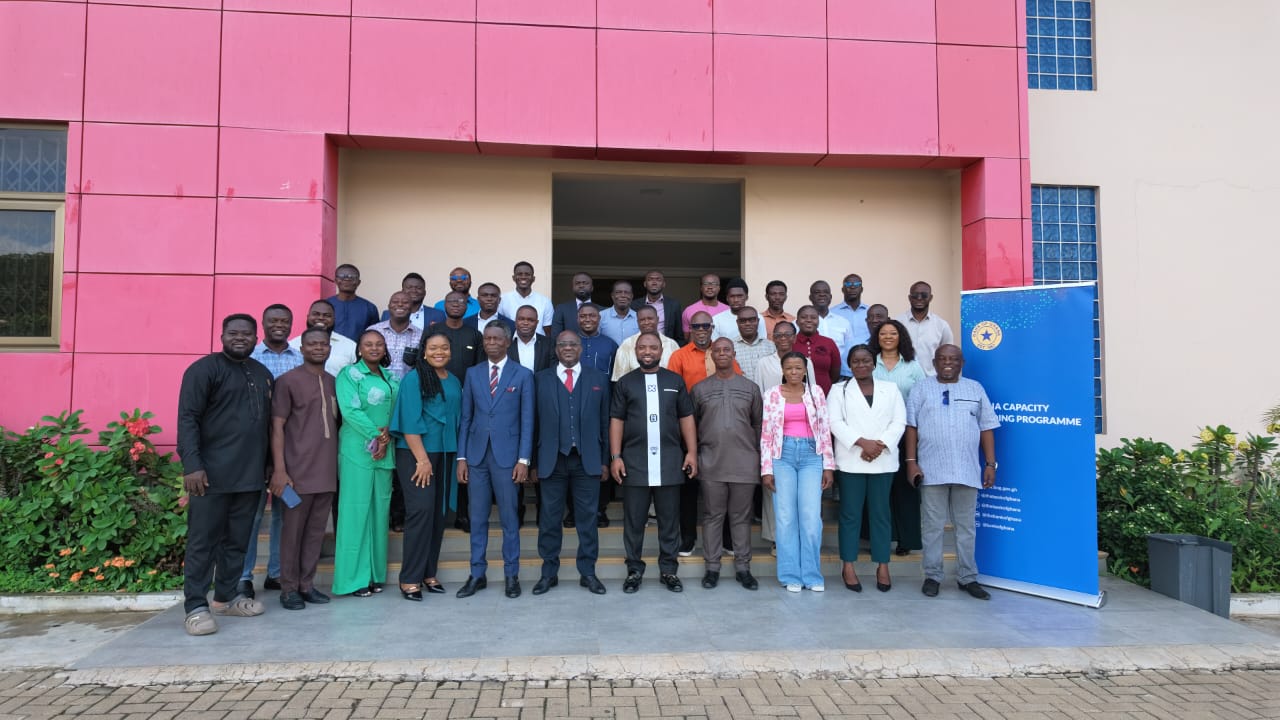
The Ghana Journalists Association (GJA) has urged business journalists to uphold editorial independence while strengthening their knowledge of monetary policy and financial sector regulation.
The Association says journalists must be willing to scrutinise government and institutional policies, ask difficult questions and hold public institutions accountable without fear or favour.
Speaking at the opening of a three-day journalism training workshop organised by the Bank of Ghana, the National Organizing Secretary of the GJA, Suleiman Mustapha, commended the Central Bank for investing in the professional development of business journalists.
He said the initiative was important given the media’s critical role in shaping public understanding of economic developments and the financial sector.
He noted that business journalism goes beyond reporting figures, interest rates, inflation statistics and movements in exchange rates, stressing the need for journalists to explain how such developments affect ordinary Ghanaians, businesses, investors and the broader economy.
According to him, economic and financial reporting requires specialised knowledge, accuracy, in-depth analysis and a strong commitment to ethical journalism.
He warned that poorly reported economic issues or stories presented without adequate context could create public misunderstanding and unnecessary anxiety, while clear and balanced reporting could promote informed public debate and strengthen accountability.
Suleiman Mustapha further encouraged participants to take full advantage of the training to deepen their understanding of monetary policy, financial sector regulation and other issues relevant to Ghana’s economic development.
He added that journalistic independence must be balanced with fairness, professionalism and a commitment to facts, noting that journalists must neither act as public relations agents for institutions nor approach policy decisions with prejudice.
He also called on the Bank of Ghana to sustain its engagement with the media beyond the training programme through continuous dialogue, timely access to information and clear explanations of policy decisions.
He said such engagement would enable journalists to report complex financial and economic issues more effectively without compromising their editorial independence.
Story by : Ama Pomaa Kyekyeku