
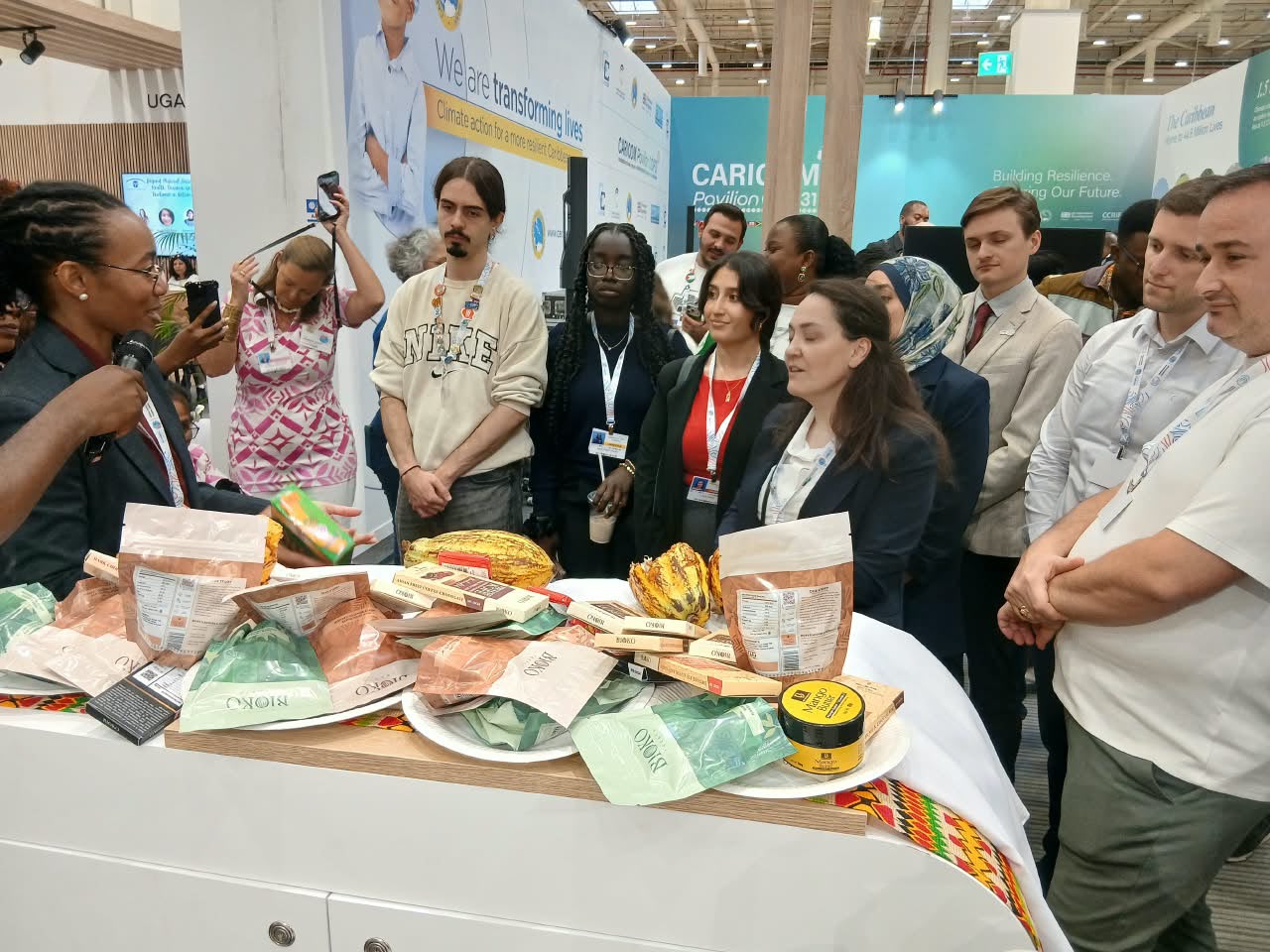
Ghana has showcased its rich cocoa heritage and growing capacity for science-driven local production at the 31st United Nations Climate Change Conference (COP31) in Antalya, Turkey, using the global platform to promote indigenous products and highlight opportunities in value addition.
The Minister for Environment, Science and Technology, Hon. Dr. Zanetor Agyeman-Rawlings, led the exhibition at the Ghana Pavilion, where cocoa and chocolate products were displayed alongside a range of locally developed innovations from the Council for Scientific and Industrial Research (CSIR), particularly its Food Research Institute (FRI).
The exhibition attracted considerable interest from COP31 participants, with visitors sampling the products, expressing appreciation for their quality and variety, and requesting further information and contacts to explore potential business partnerships.
The showcase highlighted Ghana’s ambition to move beyond the export of raw agricultural commodities by strengthening local processing, manufacturing and the development of competitive Ghanaian brands.
Cocoa, one of Ghana’s most important agricultural commodities, featured prominently in the exhibition, demonstrating the economic opportunities associated with transforming locally produced raw materials into finished products for domestic and international markets.

The inclusion of products developed by CSIR also highlighted the contribution of scientific research and technological innovation to industrial development, job creation and economic transformation.
Through its Food Research Institute, CSIR continues to demonstrate how research and indigenous knowledge can be translated into practical products capable of meeting market demands and creating new opportunities for local enterprises.
Beyond promoting Ghanaian products, the exhibition provided an opportunity for international engagement and networking, with participants showing interest in the availability, production capacity and commercial potential of the products on display.
For the Minister, the initiative underscored the importance of linking scientific research to practical economic outcomes while supporting local industries and ensuring that greater value is retained within the Ghanaian economy.
Ghana’s participation at COP31 is therefore not limited to discussions on climate change, environmental protection and resilience but also highlights the country’s productive capacity, technological advancement and commitment to sustainable economic development.
The exhibition reinforced the message that environmental sustainability and economic growth can be pursued together through innovation, local production and the responsible utilisation of natural resources.
By bringing Ghanaian cocoa, locally manufactured products and scientific innovations to the international stage, the country is positioning its homegrown industries for greater visibility, investment and access to global markets.