
The Minister for Trade,Industry and Agribusiness, Elizabeth Ofosu-Adjare, has outlined a series of government interventions aimed at strengthening Ghana’s agro-processing industry and creating a more supportive business environment for local manufacturers.
She said government was working to address challenges confronting manufacturers, including unreliable supplies of raw materials, limited access to financing, delays in regulatory approvals and difficulties accessing markets.
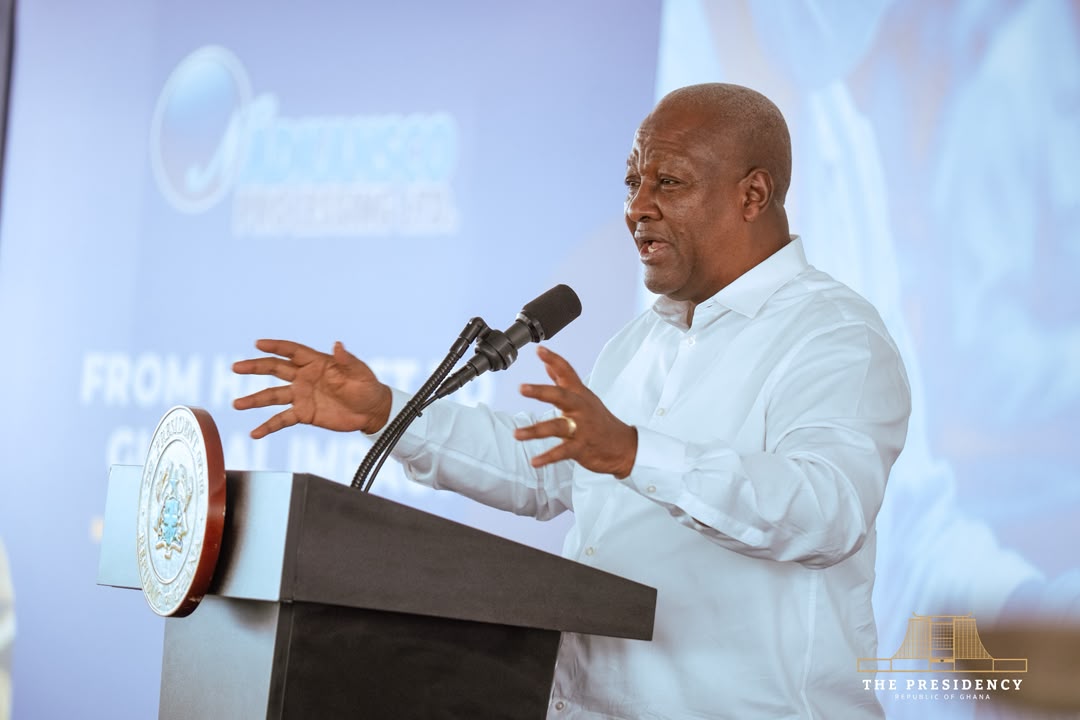
Speaking at the commissioning of the Nakasco Investments cashew processing factory at Twebodom in the Bono East Region, the Minister said the success of the facility would depend not only on its establishment but also on its ability to maintain production, secure markets and sustain relationships with local farmers.
She congratulated the owners and management of Nakasco for expanding their agricultural trading operations into cashew processing, describing the investment as an important contribution to Ghana’s industrialisation agenda.
According to her, the factory has the potential to generate economic opportunities beyond its immediate operations by providing farmers with a dependable market for their produce while creating jobs for transporters, suppliers and other service providers.
She noted that the investment would also increase economic activity in Twebodom and the wider Bono East Region while enabling Ghana to earn more from processed cashew products rather than exporting raw agricultural produce.

Mrs Ofosu-Adjare disclosed that government had approved the National Agribusiness Policy and was taking steps towards its implementation.
She said the Feed the Industry Programme was also being used to strengthen linkages between farmers and local processors to ensure reliable supplies of raw materials for factories and dependable markets for agricultural producers.
On financing, the Minister acknowledged the support of the Ghana Export-Import Bank (GEXIM), which has provided financial assistance to Nakasco Investments to establish its processing operations.
She further disclosed that the Ministry was undertaking an assessment of 95 processing facilities established under the Rural Enterprises Programme to determine their operational status and identify the support required to revive viable facilities.
Although the programme has formally ended, she said 60 of the facilities required further attention, with some needing equipment while the operational readiness and utilisation of others remained to be established.
A technical team constituted by the Ministry is therefore visiting facilities across all 16 regions to assess their conditions and recommend measures to bring viable ones into operation.
The Minister also announced plans to introduce a Business Regulatory Reform Bill to address administrative bottlenecks affecting businesses.
She said the proposed legislation would be forwarded to the Attorney-General’s Department for final drafting before submission to Cabinet for consideration.
The bill, when enacted, is expected to establish an Office of Business Regulatory Reform within the Ministry of Trade, Agribusiness and Industry and empower the Minister to monitor business-related regulatory activities and issue appropriate directives to improve the business environment.
Mrs Ofosu-Adjare explained that the initiative was intended to ensure that investors could obtain the necessary permits and regulatory approvals without avoidable delays while complying with the country’s laws.

She stressed that unnecessary administrative delays increased the cost of doing business and could discourage investment in the manufacturing sector.
On market access and product competitiveness, she encouraged Nakasco to work with the Ghana Standards Authority for product testing and certification and the Ghana Export Promotion Authority for export guidance, market information and connections to potential buyers.
She said combining these interventions with GEXIM’s financial support would strengthen the company’s competitiveness and create opportunities for business expansion.
The Minister also urged the management of Nakasco to maintain strong relationships with cashew farmers and provide decent working conditions for its employees, describing both as essential to the factory’s long-term sustainability.
She assured the company of the Ministry’s continued engagement as its operations expand.
Mrs Ofosu-Adjare commended President John Dramani Mahama for attending the commissioning despite his earlier engagement in Accra, where he launched an investment forum alongside African business magnate Aliko Dangote.
She described the President’s decision to travel to Twebodom for the commissioning as a demonstration of his commitment to Ghana’s industrial development.
The commissioning of the Nakasco facility is expected to strengthen local cashew processing, promote value addition, create employment and contribute to the development of Ghana’s agricultural value chain.