
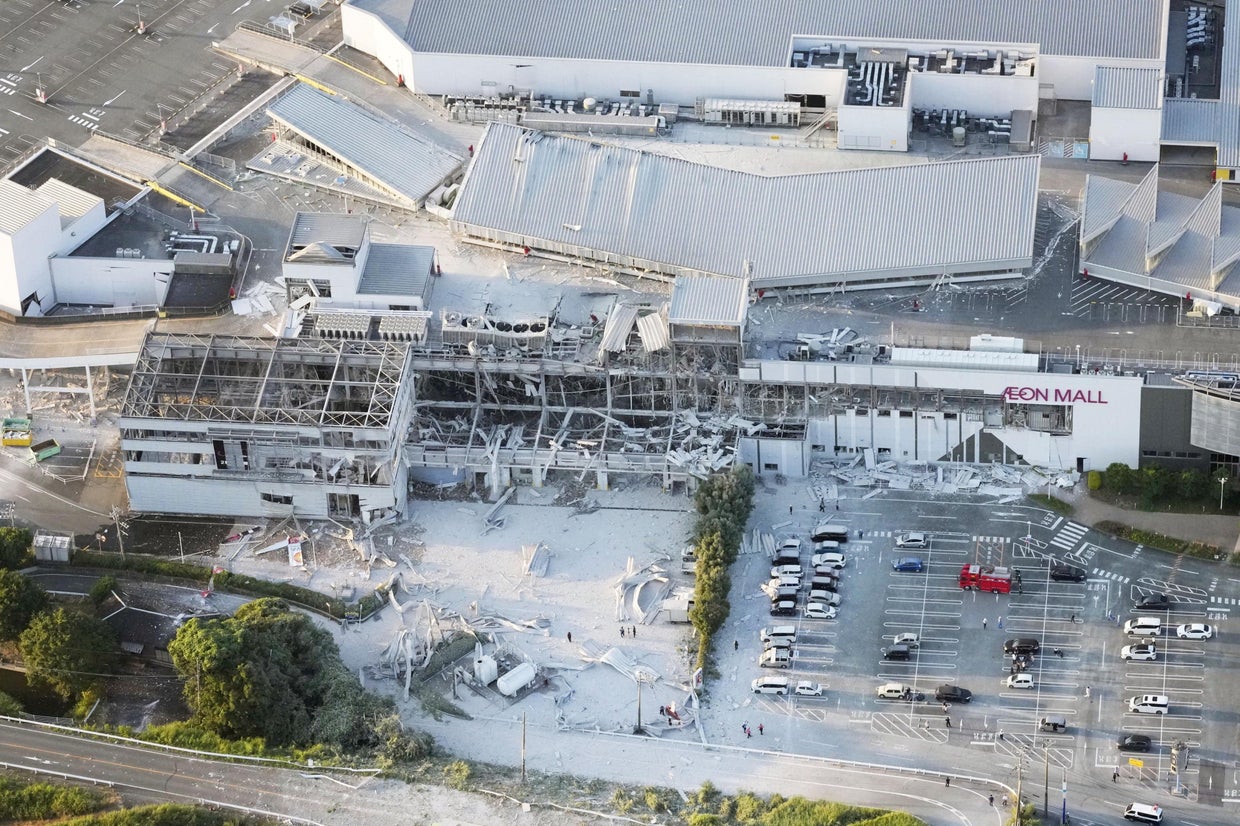
A powerful magnitude 7.1 earthquake struck Kumamoto Prefecture in Japan’s Kyushu region on Tuesday, July 28, 2026, at approximately 4:27–4:35 p.m. local time (JST).
The quake registered up to shindo 7,the highest level on Japan’s seismic intensity scale in the cities of Uki and Hikawa. At this intensity, people cannot remain standing and may be thrown into the air; unsecured furniture can topple or be tossed about, and reinforced concrete walls may collapse.
The epicenter was located in or near the city of Uki (just south of Kumamoto City), at a shallow depth of about 10 km. Strong shaking of upper 6 was felt in Yatsushiro, Uto, Mashiki, Misato, and Kumamoto City’s Minami Ward, with lower 5 or stronger intensities recorded across much of Kumamoto and neighboring prefectures including Nagasaki, Kagoshima, Fukuoka, Saga, and Miyazaki. The U.S. Geological Survey later revised the magnitude downward to 6.8 (Mw), while the Japan Meteorological Agency (JMA) maintained a preliminary reading of 7.1 (MJMA). This was the first shindo 7 event in Japan since the 2024 Noto Peninsula earthquake.
The JMA issued a tsunami advisory for the coastal areas of the Ariake and Yatsushiro seas, warning of possible waves of 20 cm to 1 meter and urging people to stay away from the coast and ocean. The first waves were believed to have arrived shortly after the quake, but no significant tsunami was ultimately observed; the advisory was lifted at around 6:10 p.m., roughly 100 minutes after the mainshock