The Supreme Court has scrapped the long-held political party delegates system to make way for all party members to vote for their party candidates.
By a 5–2 majority decision, the apex court held that all registered political party members in good standing are to be allowed to vote in the election of all party leaders and candidates.
The seven-member panel judgement on Wednesday, July 29, means there will be a ‘one party member, one vote’ during internal political party elections.
The landmark ruling brings to a close a constitutional challenge that has generated intense legal and political debate over the extent of democratic participation within political parties.
The suit was filed by former Minister for Environment, Science, Technology and Innovation, Professor Kwabena Frimpong-Boateng; veteran politician Dr Nyaho Nyaho-Tamakloe; and former Lands and Forestry Minister, Dr Christine Amoako-Nuamah.
They argued that restricting voting rights to a limited number of delegates was inconsistent with the democratic principles enshrined in Ghana’s 1992 Constitution.
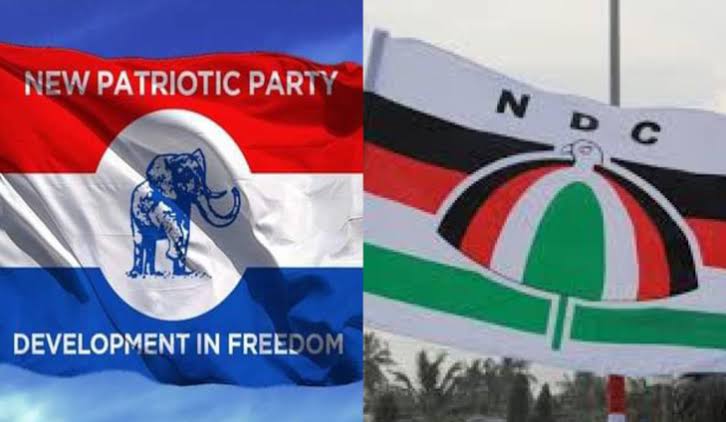
Since the commencement of the Fourth Republic, Ghana’s leading political parties–the New Patriotic Party (NPP) and the National Democratic Congress (NDC) – as well as other smaller parties have relied on delegate-based electoral colleges to elect presidential candidates, parliamentary candidates and national executives.
The delgate-based system reserved voting rights for selected party executives, constituency officers and accredited delegates, leaving the majority of ordinary members without a direct say in choosing party leaders.
In their claim, the plaintiffs contended that the delegates system created inequality among party members by granting electoral rights to a privileged minority while excluding ordinary members in good standing.
They also maintained that political parties, as institutions recognised under Article 55 of the Constitution, are required to organise and operate in accordance with democratic principles, making broad participation in internal elections a constitutional imperative.
In support of the plaintiffs’ case, the Attorney-General’s Department urged the Supreme Court to adopt a “one member, one vote” approach.
The state argued that political parties perform an important public function within Ghana’s democratic framework and that their internal electoral processes should reflect the constitutional values of equality, participation and universal suffrage.
The Attorney-General further submitted that expanding voting rights to all registered members would strengthen accountability and deepen internal democracy.
The political parties in the country are expected to amend their constitutions to scrap the delegates system while the Electoral Commission (EC) has been ordered to ensure no political party goes against the ruling.