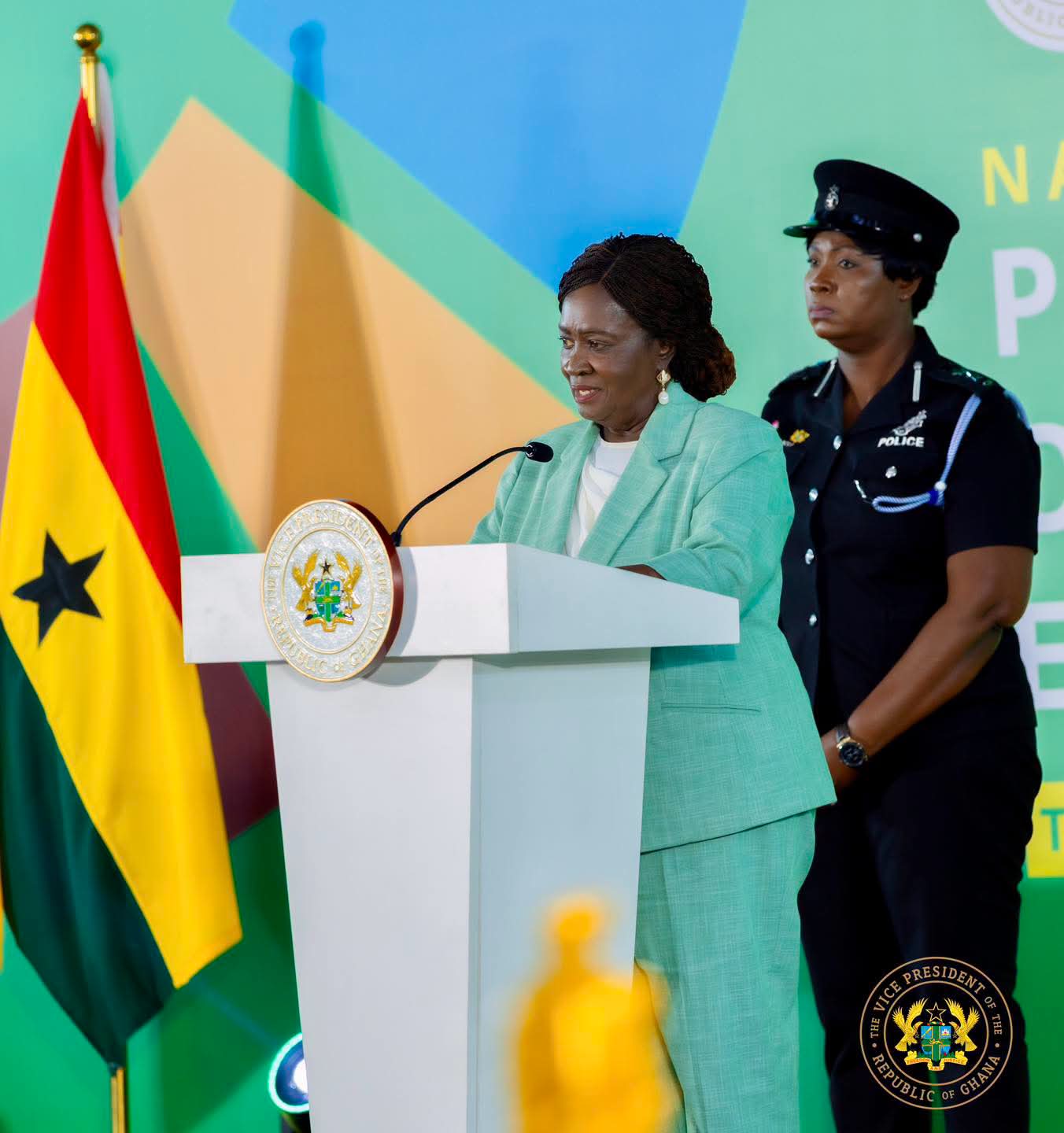
Vice President Professor Jane Naana Opoku-Agyemang has officially launched the Presidential Initiative on Maternal Health Emergency Response (PRIMA), a five-year multi-sectoral programme aimed at reducing Ghana’s persistently high maternal mortality.
Speaking at the launch, the Vice President said Ghana had made significant progress in maternal healthcare, with about nine out of ten women receiving at least four antenatal care visits and delivering in health facilities, while skilled health personnel attend about 86 percent of births.

She said, however, that the country’s maternal mortality ratio remained “unacceptably high” compared with the Sustainable Development Goal target of fewer than 70 deaths per 100,000 live births by 2030.
Prof. Opoku-Agyemang stressed the need for transport, communication systems, receiving facilities and clinical teams to operate seamlessly, particularly during obstetric emergencies.
She noted that many of the leading causes of maternal deaths were known and largely preventable or treatable, making the continued loss of mothers particularly tragic.
“Delays, the lack of essential materials, insufficient emergency capacity or slow corrective action too often turn a manageable complication into a fatal one,” she said.
PRIMA to address systemic gaps
The Vice President explained that PRIMA was designed to address challenges that individual health facilities could not resolve on their own, including financing, infrastructure, staffing, procurement, data and community mobilisation.

She said the initiative would also identify successful interventions and replicate them in other parts of the country.
Prof. Opoku-Agyemang cited Dodua as an example of what sustained intervention could achieve, recalling President John Dramani Mahama’s reference to a successful intervention during his first administration that resulted in zero maternal deaths in the area.
Three pillars
According to the Vice President, PRIMA is broadly organised around three key pillars.
The first is political leadership and social mobilisation, aimed at improving coordination among ministries, public institutions, local governments, traditional and religious leaders, civil society, the private sector and communities.
The second is institutionalised accountability and evidence-based action. This will include strengthening maternal and perinatal death surveillance and response, improving the timeliness and quality of data, clarifying institutional responsibilities and supporting regular high-level reviews of results.
The third pillar focuses on sustainable domestic financing and responsible external support.
The initiative will cover maternity and newborn care, referral and transfer systems, access to blood, medicines and essential equipment, community engagement and data use.
Prof. Opoku-Agyemang said implementation must have clear targets, responsibilities and reporting arrangements, with progress reviewed regularly.
Call for cross-sector collaboration
The Vice President emphasised that maternal mortality was not solely a health-sector problem.
She identified roads, communication, transport, water and energy as among the factors that can affect whether a woman survives pregnancy and childbirth.

She called for collaboration between ministries, agencies, local authorities, development partners and other stakeholders to identify persistent gaps and strengthen existing programmes.
Families and communities, she added, also have an important role in encouraging women to seek care early, recognising danger signs and preventing delays in accessing treatment.
Traditional and religious leaders, civil society organisations and the media were urged to reinforce these messages.
Tribute to health workers
The Vice President also commended midwives, nurses, doctors, managers and community health workers for working under pressure to manage emergencies and safely deliver mothers and babies.

“Every day, you make decisions under pressure, respond to emergencies, and carry the responsibility of bringing mothers and babies safely through childbirth,” she said.
She expressed hope that the initiative would result in more mothers surviving pregnancy and childbirth and more families remaining intact.
Story by : Akora Kofi Darko