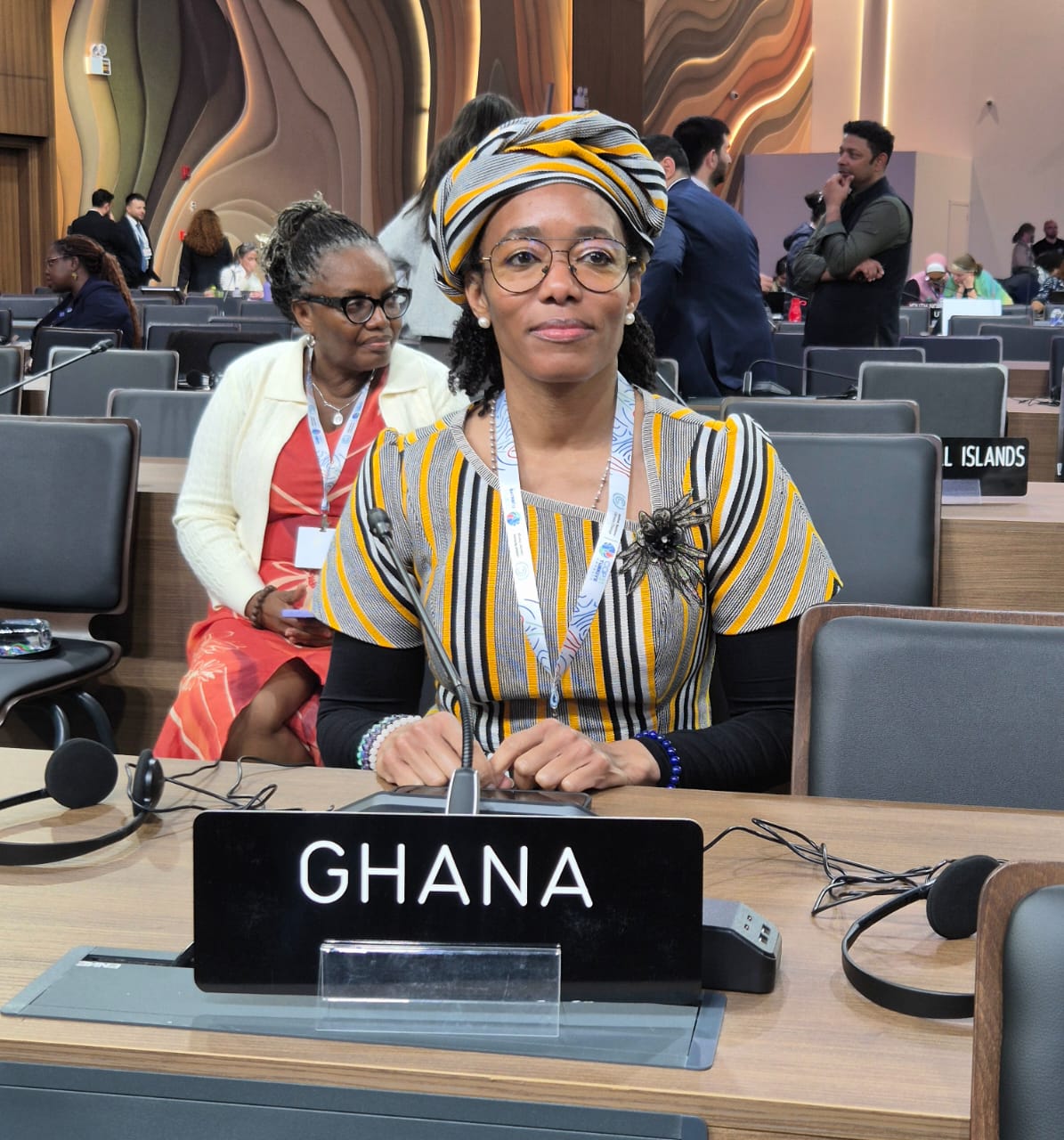
Ghana’s Minister for Environment, Science and Technology, Hon. Dr. Zanetor Agyeman-Rawlings, has reaffirmed Africa’s commitment to inclusive multilateralism and fair representation in global climate negotiations following a tense moment at the closing plenary of the 31st United Nations Climate Change Conference (COP31) in Antalya, Türkiye.
The Minister, speaking on behalf of the African Group of Negotiators (AGN), over which Ghana currently holds the chairmanship, was interrupted by the COP31 President while delivering Africa’s collective position at the plenary.
The intervention prompted the Chair of the African Group of Negotiators, Nana Dr. Antwi-Boasiako Amoah, to draw the attention of the COP31 President to the conference’s Code of Conduct and the need to uphold established procedures.
Dr. Agyeman-Rawlings subsequently returned to the floor and completed her submission, firmly reiterating Africa’s position and emphasising the importance of transparency, respect and inclusiveness in international climate negotiations.
Her intervention underscored a fundamental principle of the United Nations climate process: every country, regardless of its economic strength, size or geopolitical influence, must be afforded an equal opportunity to participate and have its voice heard in decisions affecting the planet’s future.
For Africa, which continues to bear a disproportionate burden of climate change despite contributing relatively little to global greenhouse gas emissions, the credibility and fairness of the multilateral process remain particularly critical.
The episode also highlighted Ghana’s responsibility as Chair of the African Group of Negotiators to protect and advance the continent’s collective interests, concerns and priorities on the global climate stage.
By returning to the floor and completing her statement, the Minister reinforced a clear message that Africa’s voice cannot be sidelined in decisions concerning its future. She further demonstrated Ghana’s determination to champion fairness, accountability and meaningful participation in global climate governance.
As COP31 concludes, Ghana’s intervention serves as a reminder that successful climate diplomacy must go beyond securing agreements. It must also uphold the principles of equity, mutual respect, transparency and collective responsibility upon which effective multilateral cooperation depends.
Ghana remains committed to strengthening international cooperation and advancing Africa’s climate priorities towards a just, inclusive and sustainable future.