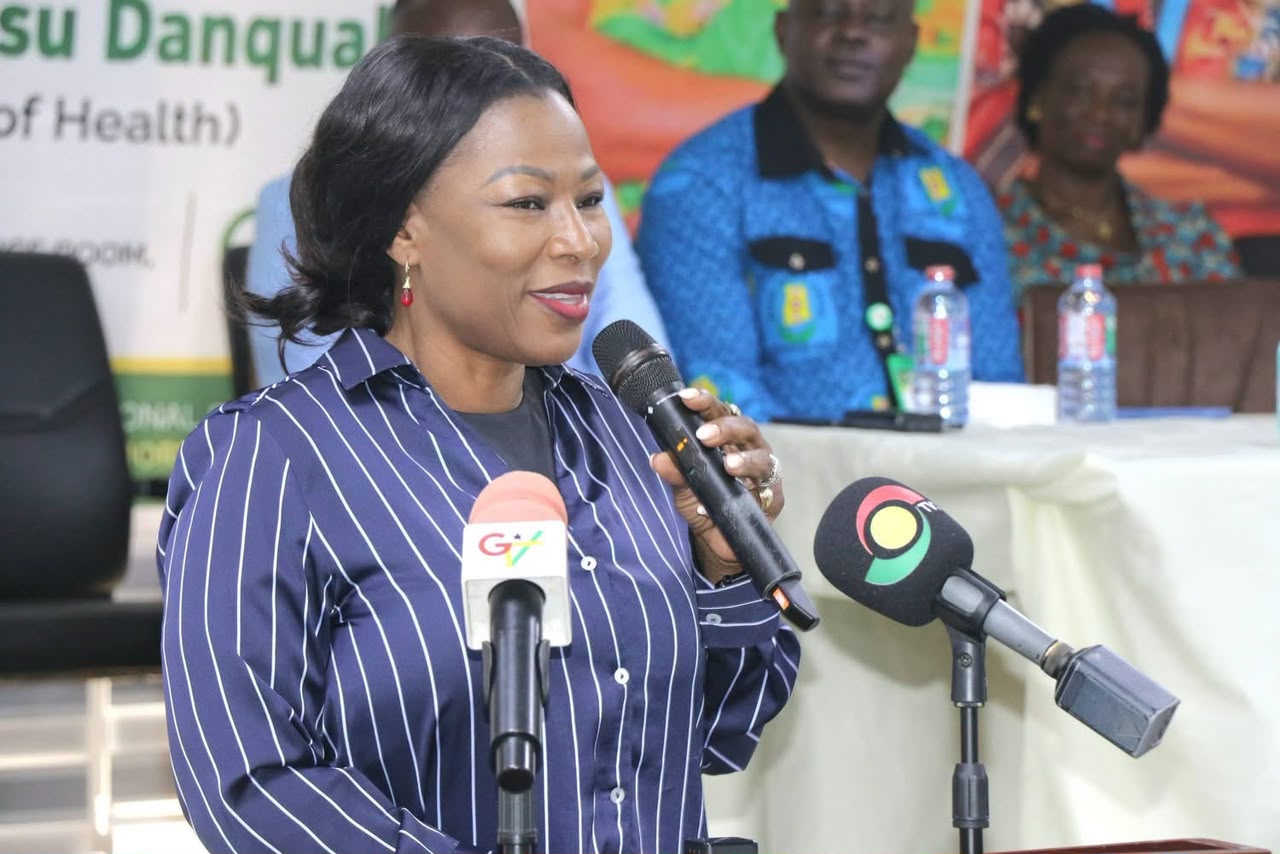
The Deputy Minister for Health, Prof. Dr Grace Ayensu-Danquah, has urged Ghanaians to join the government’s efforts to reduce maternal deaths, declaring that no woman should lose her life while giving birth.
Ghana has made notable progress, with the maternal mortality ratio declining from 943 deaths per 100,000 live births in 2000 to 234 in 2023, according to the World Health Organization and partner agencies. Despite this improvement, the figure remains far above the Sustainable Development Goal target of fewer than 70 maternal deaths per 100,000 live births by 2030.
Prof. Ayensu-Danquah emphasised that these statistics represent real lives, families and futures permanently affected by the loss of mothers. She noted that President John Dramani Mahama has made reducing maternal mortality a national priority, with the Ministry of Health implementing measures under the Maternal Mortality Action and Response Plan (MMARP) to accelerate progress.

“As a medical doctor, a woman, a mother and Deputy Minister for Health, I share that commitment,” she said. Together with Health Minister Kwabena Mintah Akandoh, she is determined to work with health professionals, traditional leaders, development partners and communities to strengthen maternal healthcare.
Why are women still dying?
As part of the MMARP, the Deputy Minister recently toured the Greater Accra and Ashanti Regions, engaging health professionals, traditional leaders and other stakeholders. A recurring question was why some women continue to die in childbirth despite attending more than eight antenatal care visits.
Access alone is not enough, she explained. Fatal complications can still arise when emergency care is delayed, referral systems fail, or critical services are unavailable when needed. She stressed the need to improve not only access but also the quality, timeliness and effectiveness of maternal healthcare.
During visits to the Greater Accra and Ashanti Regional Health Directorates, she discussed maternal mortality trends and gaps in emergency obstetric care and referral systems with health managers, medical directors, frontline staff and development partners.

She also met the Ga Mantse, King Tackie Teiko Tsuru II, and the Asantehene, Otumfuo Nana Osei Tutu II, to seek the support of traditional authorities. Traditional leaders, families, communities, religious leaders and other opinion leaders all have a role to play in ensuring pregnant women receive timely care, she said.
A call to all Ghanaians
Prof. Ayensu-Danquah appealed to health workers, men, families, community leaders, employers, faith-based organisations and civil society groups to support efforts to prevent maternal deaths. She encouraged families to ensure pregnant women attend antenatal clinics, deliver in health facilities and seek immediate medical help when complications arise.
“Most maternal deaths are preventable,” she said, stressing that timely care, stronger health systems and community support can save more mothers.
The government’s vision, she added, is clear: every pregnancy should be safe, every delivery protected, and every mother should return home with her newborn.
“For President Mahama, every mother must live. What about you?”
Story by : Belinda Annim Piesie