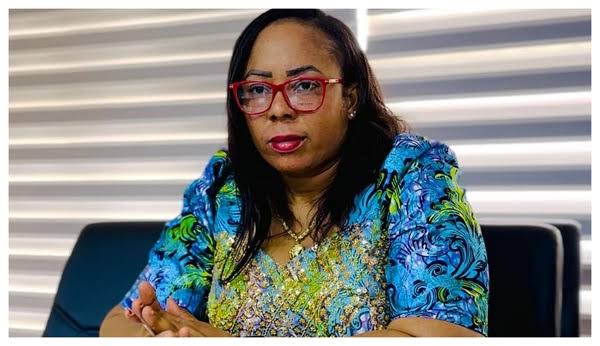
Greater Accra Regional Minister, Linda Obenewaa Akweley Ocloo, has called for stronger, better-resourced and more accountable local governance institutions as Ghana continues efforts to deepen decentralisation.
The Regional Minister made the call after participating in Day One of the National Dialogue on Decentralisation and Responsive Governance, a two-day national engagement organised by the Inter-Ministerial Coordinating Committee (IMCC) on Decentralisation.
The dialogue is focused on examining Ghana’s decentralisation framework and exploring ways to make local governance more responsive, inclusive and effective.
According to Mrs Ocloo, decentralisation should go beyond being an administrative arrangement and must serve as a means of strengthening Ghana’s democracy by bringing government closer to citizens.
«“Decentralisation is not merely an administrative arrangement. It is a democratic commitment to bring government closer to the people, give communities a stronger voice in decisions that affect their lives and ensure that development is driven by the realities and aspirations of our people.”»
She stressed the need to empower Metropolitan, Municipal and District Assemblies (MMDAs) with the resources and authority required to deliver effectively while ensuring that they remain accountable for their performance.
«“Our vision must be a system of local governance where Metropolitan, Municipal and District Assemblies are adequately empowered, adequately resourced and held firmly accountable for results.”»
Mrs Ocloo further argued that citizens should not have to depend excessively on central government institutions to have their concerns addressed or access basic public services.
She said the country must move beyond discussions about decentralisation to concrete reforms that strengthen local institutions and improve coordination between national and sub-national authorities.
“As we reflect on the future of decentralisation, we must move beyond dialogue to decisive action. We need stronger local institutions, meaningful citizen participation, improved coordination between national and sub-national authorities and a governance framework that makes development more equitable and responsive.”
The Greater Accra Regional Minister also emphasised the importance of ensuring that decentralisation translates into tangible improvements in the lives of people across the country.
She envisioned a Ghana where citizens, irrespective of where they live, can experience the presence of government through quality public services, infrastructure and opportunities.
«“A truly decentralised Ghana is one where every community, regardless of its location or circumstances, can feel the presence of government through quality services, infrastructure and opportunities.”»
Mrs Ocloo said the national dialogue provides an important platform for stakeholders to shape a governance system that gives citizens a greater role in decisions affecting their communities.
She added that the ultimate objective should be to create a governance system in which power is not simply exercised on behalf of citizens but is meaningfully shared with them.
The National Dialogue on Decentralisation and Responsive Governance is expected to provide an opportunity for stakeholders to deliberate on reforms and strategies aimed at strengthening Ghana’s decentralisation system and making local governance more responsive to citizens’ needs.
Story by : Amos Konyo