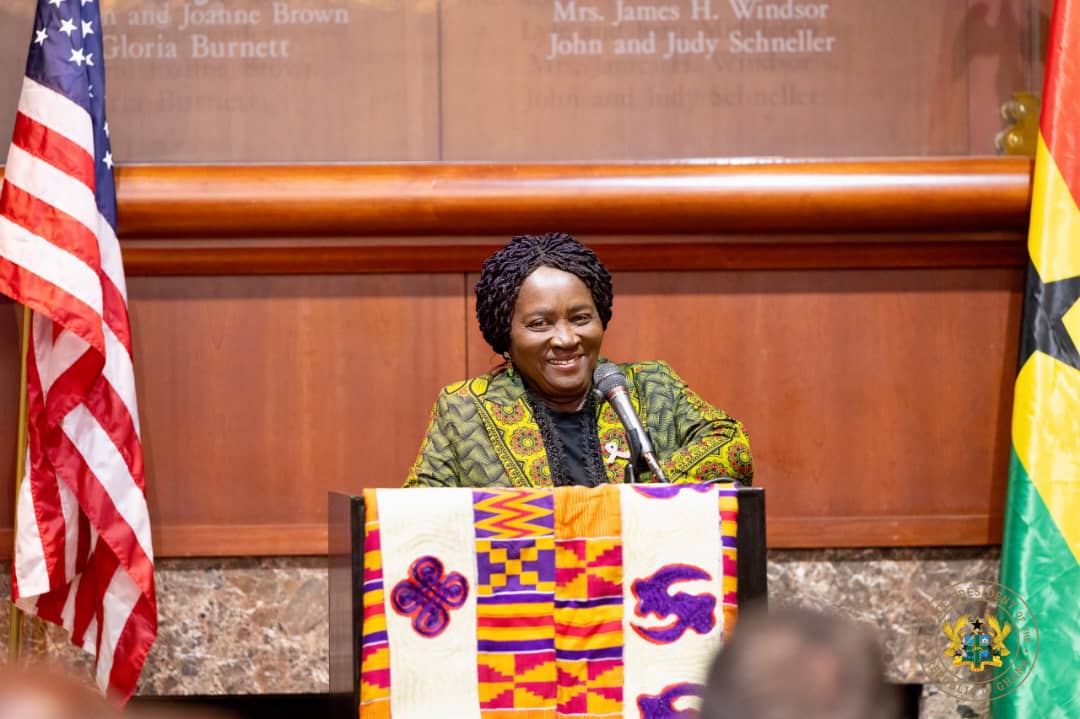
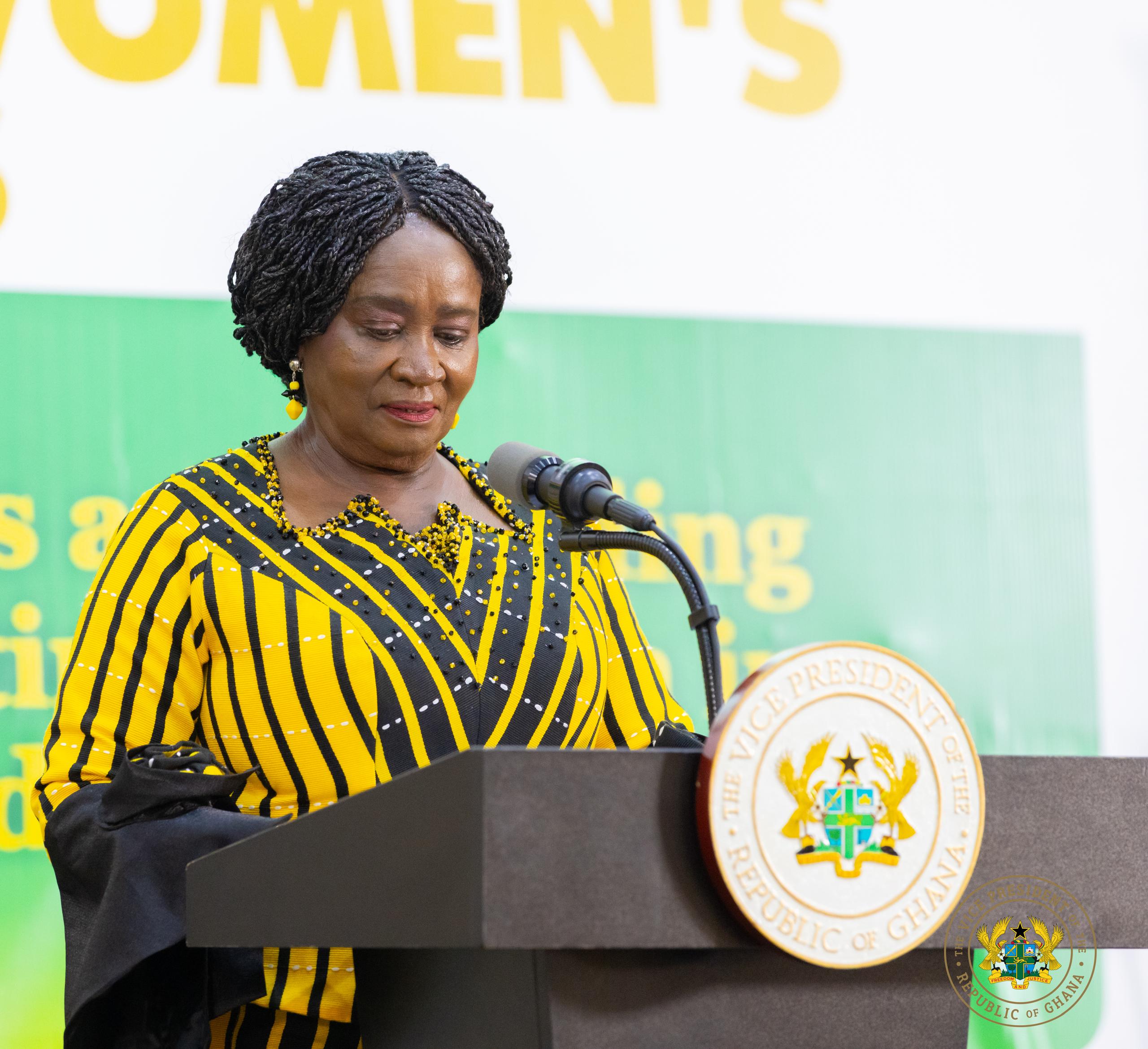
Vice President Professor Naana Jane Opoku-Agyemang has said the implementation of the Affirmative Action Act will help remove institutional barriers that limit women’s advancement in leadership and decision-making.
She noted that institutions and public policy have a critical role to play in addressing inequalities that continue to affect women, despite the progress Ghana has made in advancing women’s participation in public life.
Speaking at the Ghana Academy of Arts and Sciences Women’s Awards in Accra on Wednesday, the Vice President said the government has established the Gender Equity Committee and submitted the legislative instrument required to give the Affirmative Action Act practical effect.
She also highlighted the revised National Gender Policy and the establishment of the Women’s Development Bank, which is intended to expand access to resources for women entrepreneurs, particularly those at the base of the pyramid.
Professor Opoku-Agyemang observed that while barriers facing women in earlier generations included limited access to formal education, women today continue to face challenges such as access to finance, professional advancement, leadership and decision-making.
She stressed that the country’s understanding of women’s advancement must also take into account the long history of women’s contribution to economic and social development.
“Women were economically active long before women entered classrooms,” the Vice President said, noting that women historically farmed, fished, mined, produced goods, processed their produce and traded.

She added that women also exercised leadership before the emergence of what is now described as formal public service, playing important roles in resistance, independence and nation-building.
According to Professor Opoku-Agyemang, the expansion of formal education subsequently opened new avenues for women’s participation in employment and public life. Increasing numbers of women entered secondary schools and universities, with each generation seeing women take up positions in professions and institutions where they had previously been underrepresented.
The Vice President, however, cautioned that progress at the top should not obscure inequalities further down the ladder. She said formal recognition and meaningful contributions have not always aligned, stressing the need for institutions to create conditions that allow women’s abilities to be fully recognised and utilised.

Professor Opoku-Agyemang called for continued efforts to dismantle barriers facing women and ensure that the opportunities available to them are commensurate with their contribution to national development.
“Our collective responsibility is to recognise those barriers and continue dismantling them,” she said.
“It is on us to ensure that the opportunities available to women are as expansive as the contributions we have always expected them to make,” she added.
She congratulated the award recipients and recognised the contributions of women, both visible and less visible, who continue to play a role in building the nation.
Story by : Akora Kofi Darko