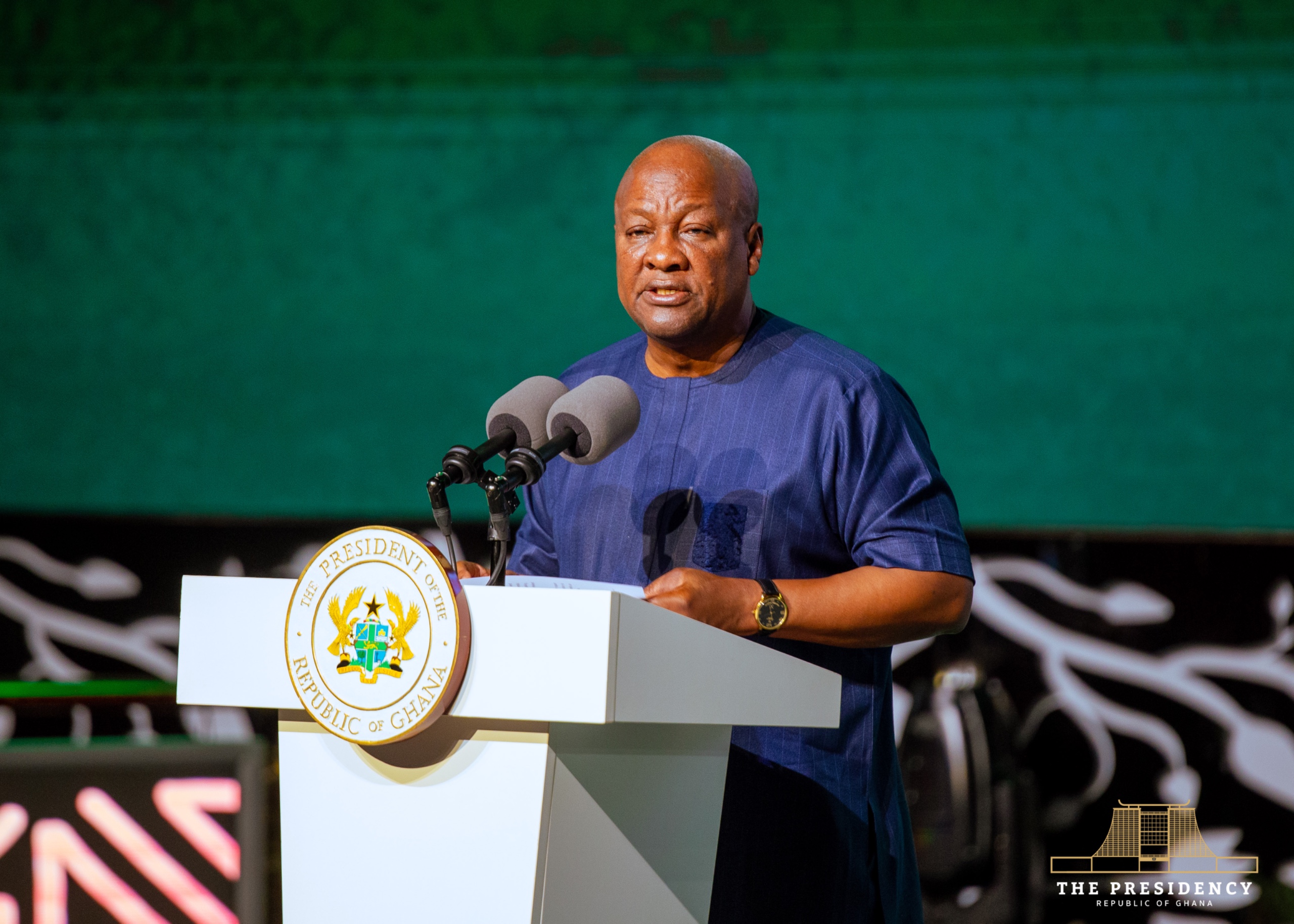
President John Dramani Mahama has called on the boards and chief executives of Ghana’s state-owned enterprises (SOEs) to translate the sector’s recent financial turnaround into durable operational efficiency, warning that public assets must continue to deliver measurable value for citizens.
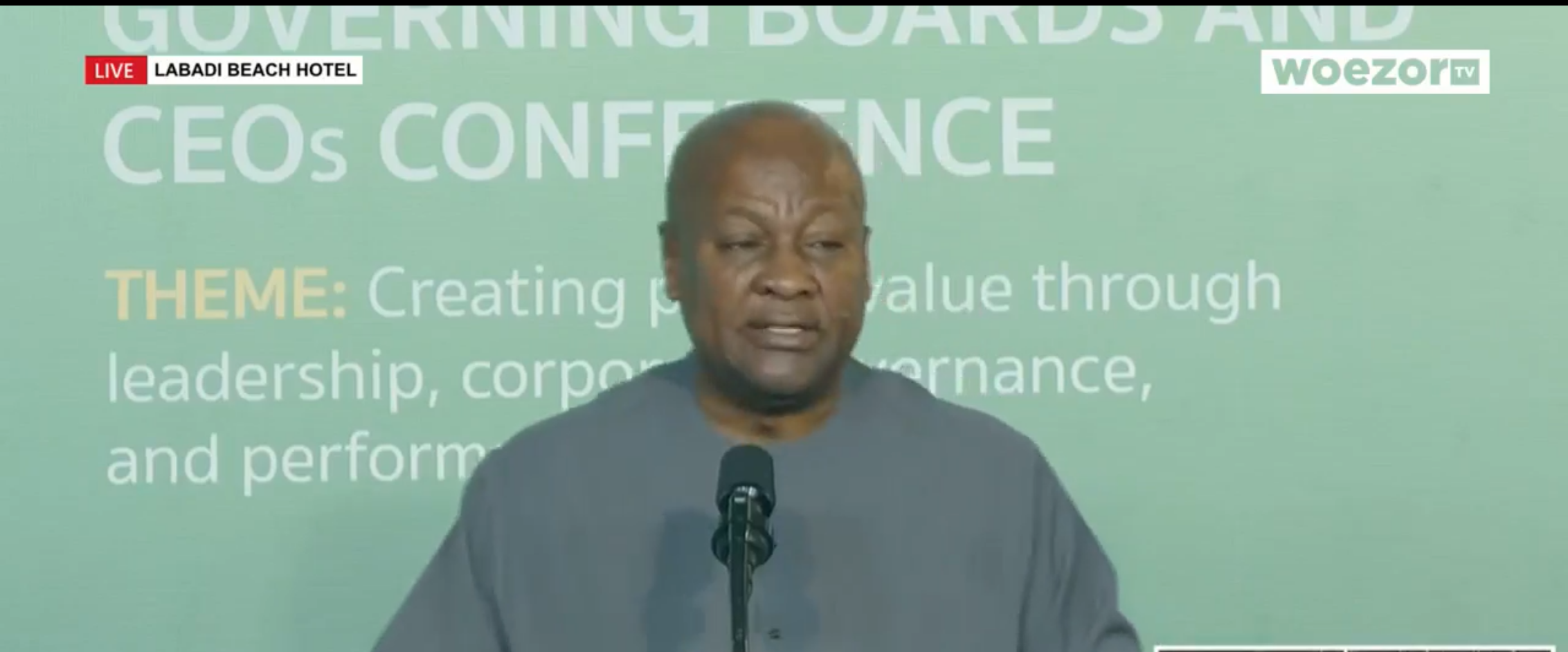
Addressing the SIGA Governing Boards and CEOs’ Conference 2026 at the Labadi Beach Hotel in Accra, the President reminded institutional leaders that the nation’s ports, power infrastructure, factories, water systems, pension funds, land, buildings, equipment and state-held shares belong ultimately to the Ghanaian people.
“Government, boards and chief executives are merely custodians of those assets and have a responsibility to manage them in the public interest,” Mahama said. “Public ownership must produce public value.”
He pressed institutional heads to back up their performance claims with credible evidence of the value they create for citizens.
A Reset in Government-SOE Relations
The President referred back to a March 2025 meeting with SOE chief executives, at which he first announced a reset in how government engages with its enterprises. He reiterated that chronic losses can no longer be absorbed quietly by the national budget, and said the State Interests and Governance Authority (SIGA) must evolve into a stronger ownership and performance oversight body. Leadership appointments, he added, should now be tied directly to measurable results, value creation and profitability.
Vice-President Professor Naana Jane Opoku-Agyemang echoed this stance during a March engagement with select entities, telling SOEs they must offer citizens as their ultimate shareholders an attractive value proposition.
Sector Posts Sharp Turnaround
Citing the latest State Ownership Report, Mahama pointed to a marked improvement in aggregate SOE performance. Combined revenue climbed from GH¢137.64 billion in 2024 to GH¢176.43 billion in 2025, a rise of roughly 28.12 per cent. More strikingly, the sector swung from an aggregate net loss of GH¢2.26 billion in 2024 to a net profit of GH¢19.8 billion in 2025. Return on assets rose from 1.3 per cent to 6.31 per cent, while return on equity improved from negative 1.6 per cent to 15.7 per cent.
Mahama cautioned, however, against crediting the numbers entirely to better management. He noted that a friendlier macroeconomic environment including improved foreign exchange conditions and lower financing costs had lifted both state and private enterprises alike. Net foreign exchange gains of about GH¢11.72 billion and a 42.5 per cent cut in aggregate finance costs were significant contributors to the improved results.
He urged SOE managers to use these favourable conditions as an opportunity to strengthen their core businesses rather than lean on temporary economic tailwinds.
Standout Performers
The President commended ten SOEs that posted positive net profits every year from 2021 to 2025. The Ghana National Petroleum Corporation (GNPC) recorded the highest average annual profit among them, followed by the Ghana Ports and Harbours Authority (GPHA). Also recognised were the Minerals Income Investment Fund (MIIF), BOST Energies, Bui Power Authority, Ghana Exim Bank, Ghana National Gas Company, TDC Company Limited, Ghana Supply Company Limited, and the Venture Capital Trust Fund.
Several other enterprises registered major turnarounds in 2025. Tema Oil Refinery (TOR) swung from a net loss of about GH¢745 million to a net profit of roughly GH¢1.09 billion its first profitable year in nearly a decade. Ghana Water Company Limited moved from a GH¢3.06 billion loss to a profit of about GH¢635 million, while the Ghana Cocoa Board (COCOBOD) improved from a GH¢5.73 billion loss to a GH¢5.11 billion profit. The Ghana Gold Board (GoldBod) also posted a sharp increase in net profit.
Warning Against Complacency
Despite the positive results, Mahama warned SOE leaders against complacency, insisting that financial gains must be underpinned by stronger core operations rather than dependence on favourable exchange rates or reduced financing costs.
“A one-year turnaround is encouraging, but sustained performance is the real test,” he said.
The President closed by urging boards and chief executives to prioritise stronger governance and greater efficiency, ensuring that Ghana’s public assets continue generating lasting value for the citizens who ultimately own them.
Story by : Emmanuel Nettey